


You step through the gate into the medina and every single one of your senses gets hit simultaneously. The smell of cumin and cinnamon and leather and cedar smoke. The sound of a hundred conversations layered over donkey hooves on stone and someone calling the price of saffron. The colors: mountains of turmeric yellow, paprika red, cobalt blue, arranged in perfect pyramids that look too beautiful to be real spices. And everywhere, people. Moving, selling, buying, talking, living at a pace and volume that makes New York City look like a library.
That is Marrakech. And it will either overwhelm you completely or become one of the best travel experiences of your life. For me, it was both.
The Souks: A Maze You Want to Get Lost In
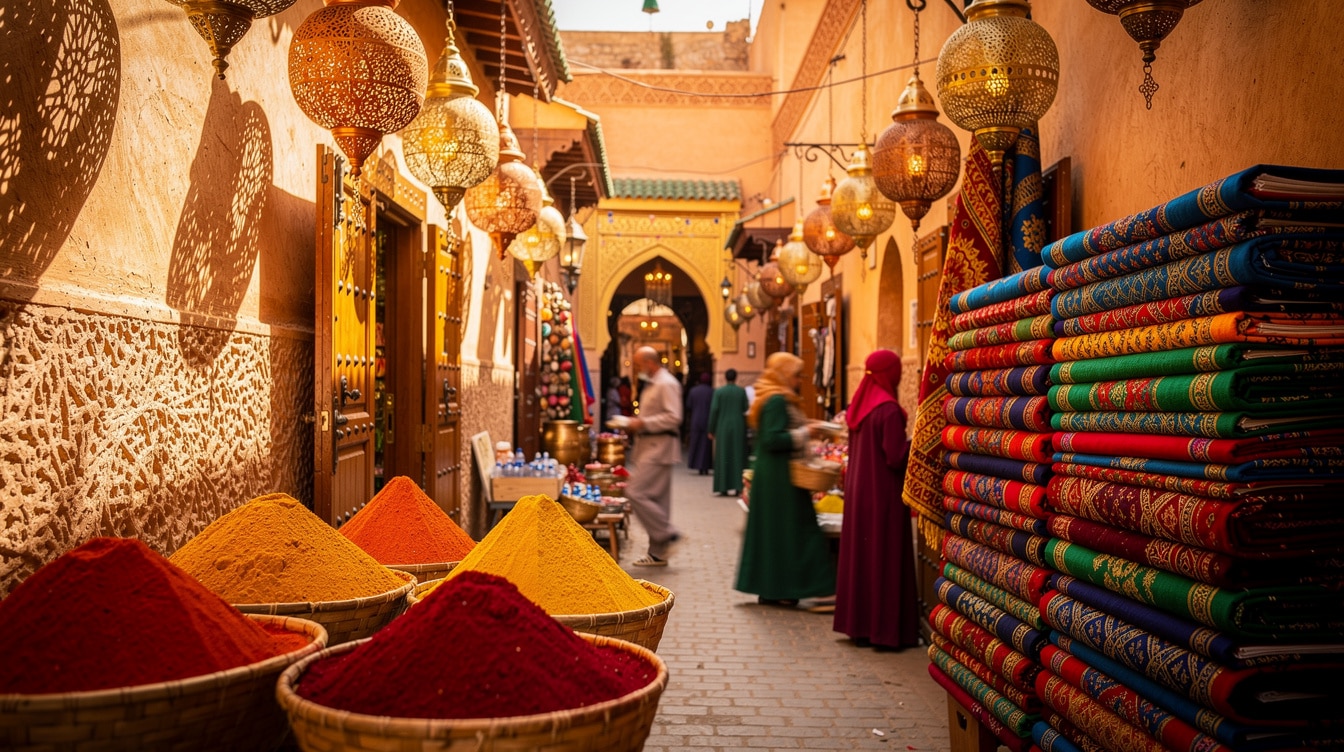
The souks of Marrakech are a labyrinth. I mean that literally. The narrow covered alleyways twist and turn and branch off into smaller passages that lead to dead ends or open into tiny squares or connect to completely different neighborhoods. You will get lost. Accept this immediately. Getting lost in the medina is not a problem, it is the entire point.
Each section of the souk specializes in something different. There is the leather souk, where bags and shoes and jackets hang from every surface. The metalwork souk, where hammered brass lanterns cast intricate shadow patterns on the walls. The textile souk, stacked floor to ceiling with silk scarves and woven rugs in colors that do not exist in the Western world. The spice souk, where the air is so thick with scent that your eyes water.
Haggling is expected. The first price you are quoted is typically three to four times what you should actually pay. Start at one-third the asking price and work from there. Be friendly, be patient, and be willing to walk away. Walking away is the most powerful negotiation tool in the medina. You will not get five steps before someone calls you back with a better price.
Jardin Majorelle: The Blue Oasis
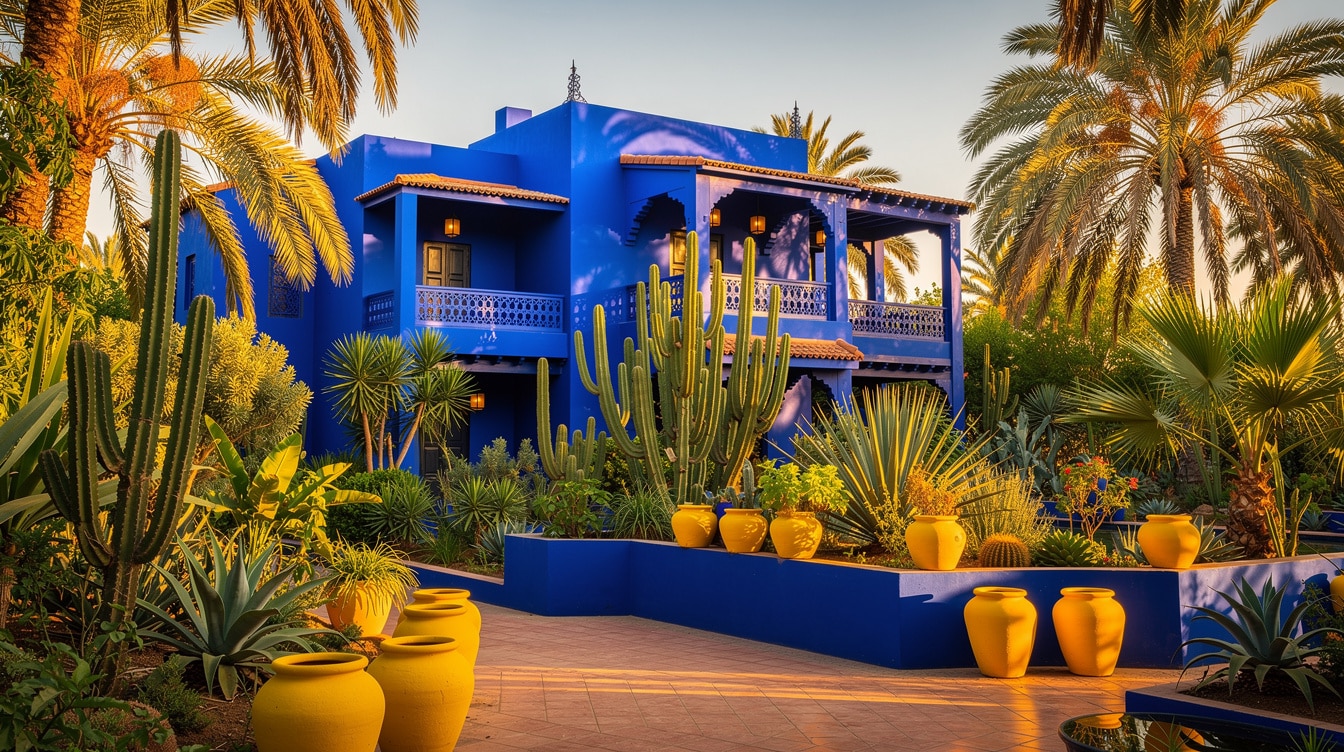
After the sensory overload of the medina, Jardin Majorelle is a different planet. This botanical garden was created by French painter Jacques Majorelle in the 1920s and later owned by Yves Saint Laurent, and it is one of the most photographed spots in Marrakech for good reason.
The garden centers around a villa painted in the most vivid cobalt blue you have ever seen. Not sky blue, not navy. A blue so intense it vibrates. Against it, bright yellow terracotta pots hold cacti and succulents, and every shade of green in the tropical plant collection pops like a painting with the saturation turned all the way up. Bamboo groves, lily ponds, bougainvillea, and paths that wind through the garden like a fever dream of color.
Go early. The garden opens at 8 AM and by 10 it is packed. In those early morning hours, with the light filtering through the palms and the fountains burbling and the blue walls glowing in the soft sun, it feels like you have stepped into another world entirely.
Jemaa el-Fna: The World’s Greatest Show
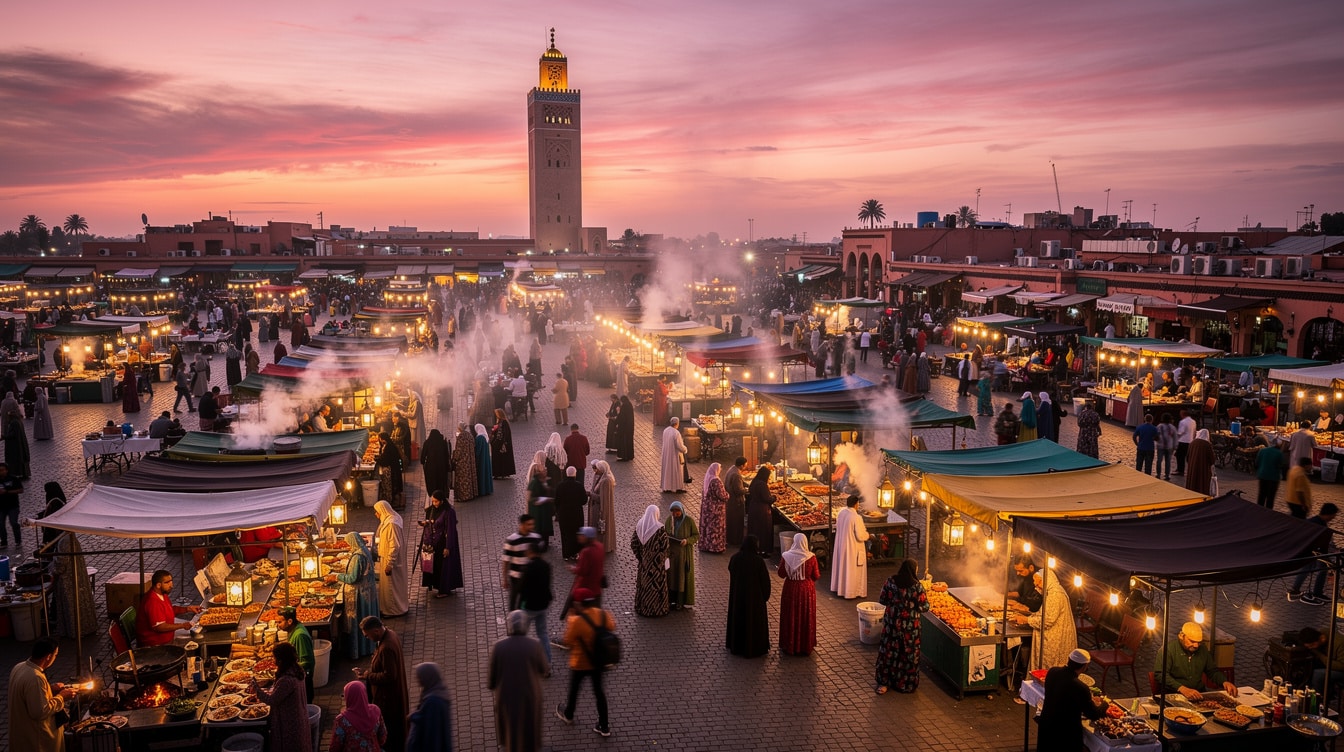
Jemaa el-Fna is the main square at the heart of the medina, and at night it transforms into something that defies description. As the sun sets, the square fills with food stalls, each one billowing steam and smoke into the warm air. Musicians play drums and ouds. Storytellers gather crowds. Henna artists, snake charmers, acrobats, and fortune tellers all compete for your attention at once.
Find a rooftop restaurant on the edge of the square, order mint tea and tagine, and just watch. The square below you moves like a living organism, thousands of people flowing between the stalls and the performers and each other, and the whole thing is lit by lanterns and bare bulbs and the soft glow of fires under cooking pots. The Koutoubia Mosque minaret rises above it all, silhouetted against a sky that goes from pink to purple to deep black.
Eat at the food stalls. I know it looks chaotic. I know the smoke and the shouting stallholders can be intimidating. Go anyway. Sit on a bench, point at what looks good, and eat. Fresh grilled lamb, merguez sausage, snail soup (yes, try it), harira, and bread that was baked thirty minutes ago. It is some of the best food I have ever eaten, and it costs almost nothing.
Sleeping in a Riad
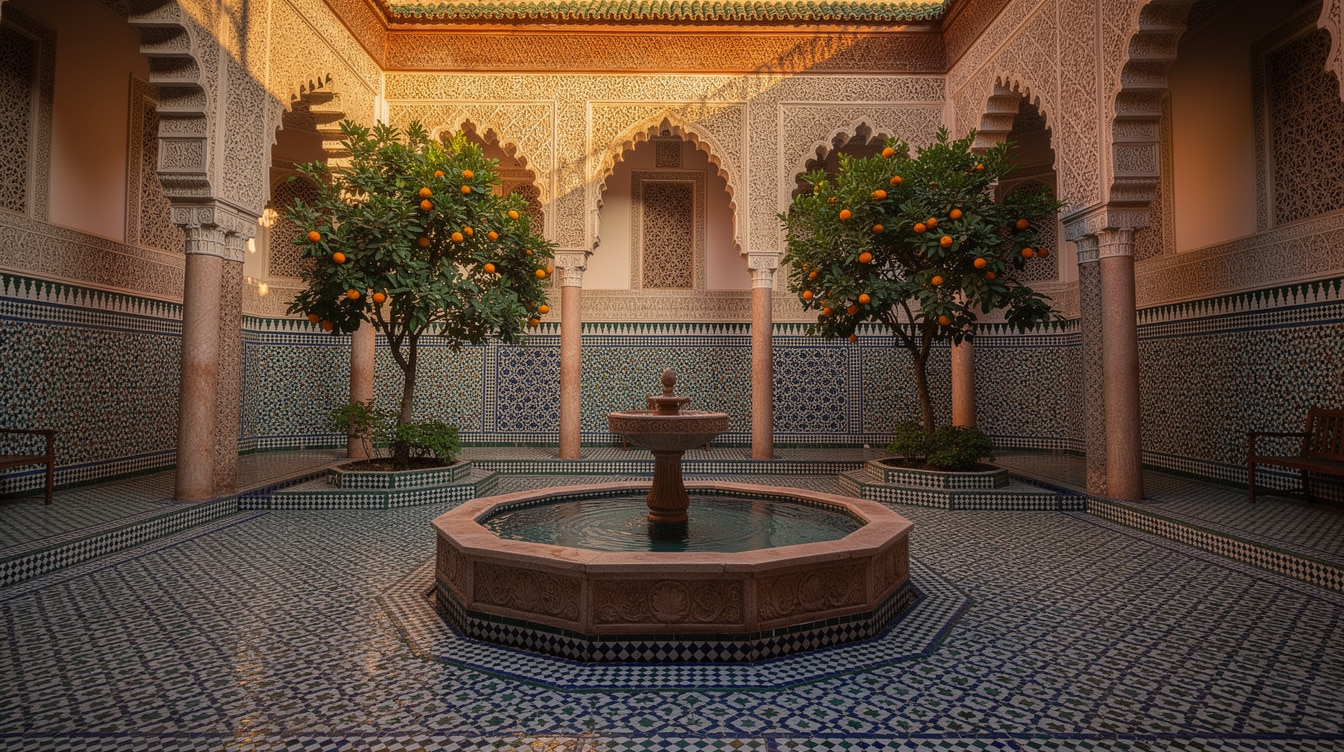
Do not stay in a hotel. Stay in a riad. A riad is a traditional Moroccan house built around a central courtyard, usually with a fountain, tiled in intricate geometric zellige patterns, with rooms opening off balconies on the upper floors. From the outside, the door looks like every other door in the medina. Inside, it is a palace.
I stayed in a riad in the heart of the medina, maybe two minutes from the souks, and every time I walked through that unassuming wooden door, the noise and chaos of the alley outside just vanished. The courtyard was cool and quiet, tiled in blue and white, with an orange tree growing in the center and the sound of water trickling from the fountain. Breakfast was served on the rooftop terrace with views over the medina rooftops to the Atlas Mountains in the distance.
Marrakech is not a relaxing destination. It is intense and loud and pushy and sometimes exhausting. But it is also beautiful and generous and surprising and alive in a way that very few places on Earth can match. You will leave tired. You will also leave changed. And you will spend the rest of your life telling people they absolutely have to go.


