

The landscape shifts from pleasant countryside into something almost violent in its beauty about two hours into the train from Zurich. The valley narrows. The mountains close in. And suddenly you are looking up at rock walls and waterfalls and snow-covered peaks that seem too dramatic to be real, flashing past the window like the world’s most extravagant screensaver.
Switzerland’s train system is legendary for good reason. The trains run on time, the views are staggering, and the journey from Zurich to Zermatt is one of the great scenic rail rides in the world. You change trains in Visp, where you board the narrow-gauge Matterhorn Gotthard Bahn that climbs the Nikolai Valley toward Zermatt, getting steeper and more dramatic with every mile. By the time you pull into Zermatt station, you have been pressing your face against the glass for three hours and your camera roll has 400 new photos.
The View from the Train
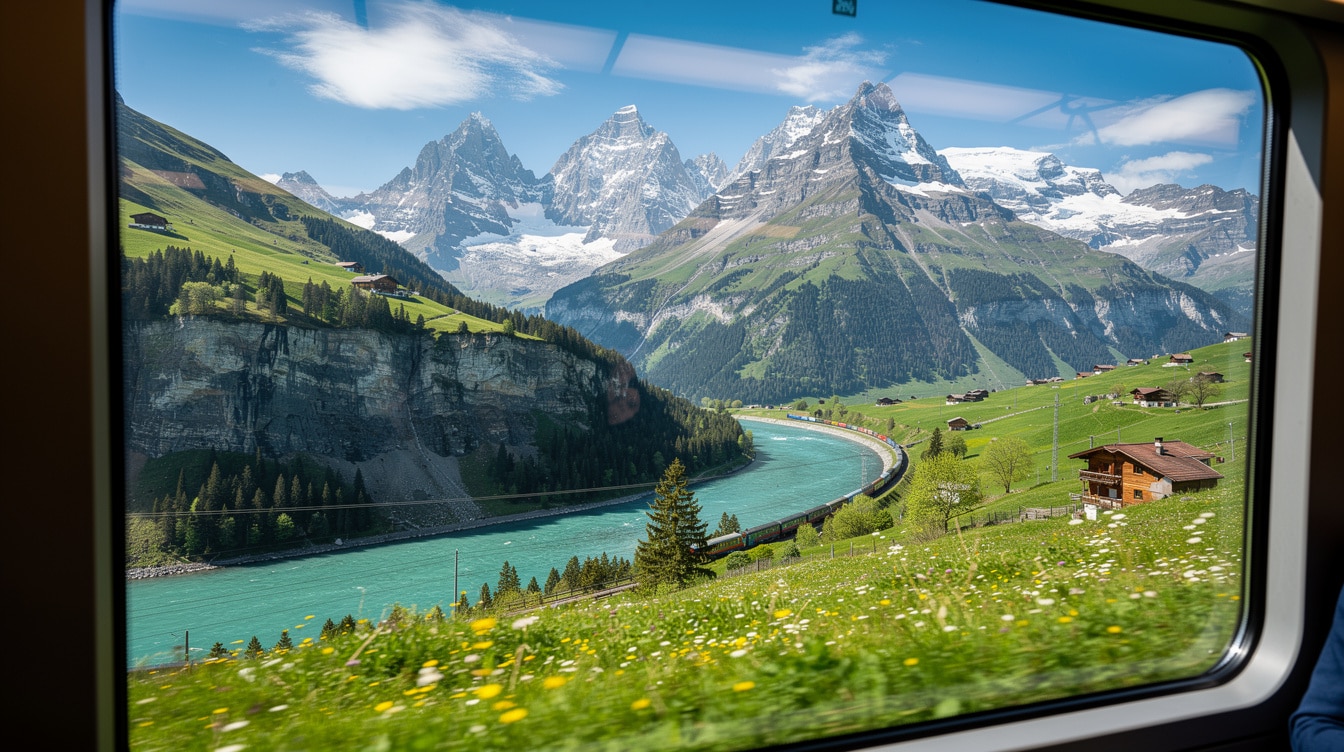
Sit on the right side of the train for the best views heading south. The valley opens up periodically to reveal villages perched on impossible ledges, vineyards cascading down terraced hillsides, and rivers of glacial meltwater running turquoise through the valley floor. The Swiss have been building around these mountains for centuries, and the way the wooden chalets and church steeples fit into the landscape makes it look like the buildings grew there naturally.
The higher the train climbs, the more dramatic the scenery gets. Forests give way to alpine meadows. The snow line creeps lower on the peaks. And then, if the weather is clear, you get your first glimpse of the Matterhorn through the valley ahead, that unmistakable pyramid shape rising above everything else like a monument.
Zermatt and the Matterhorn
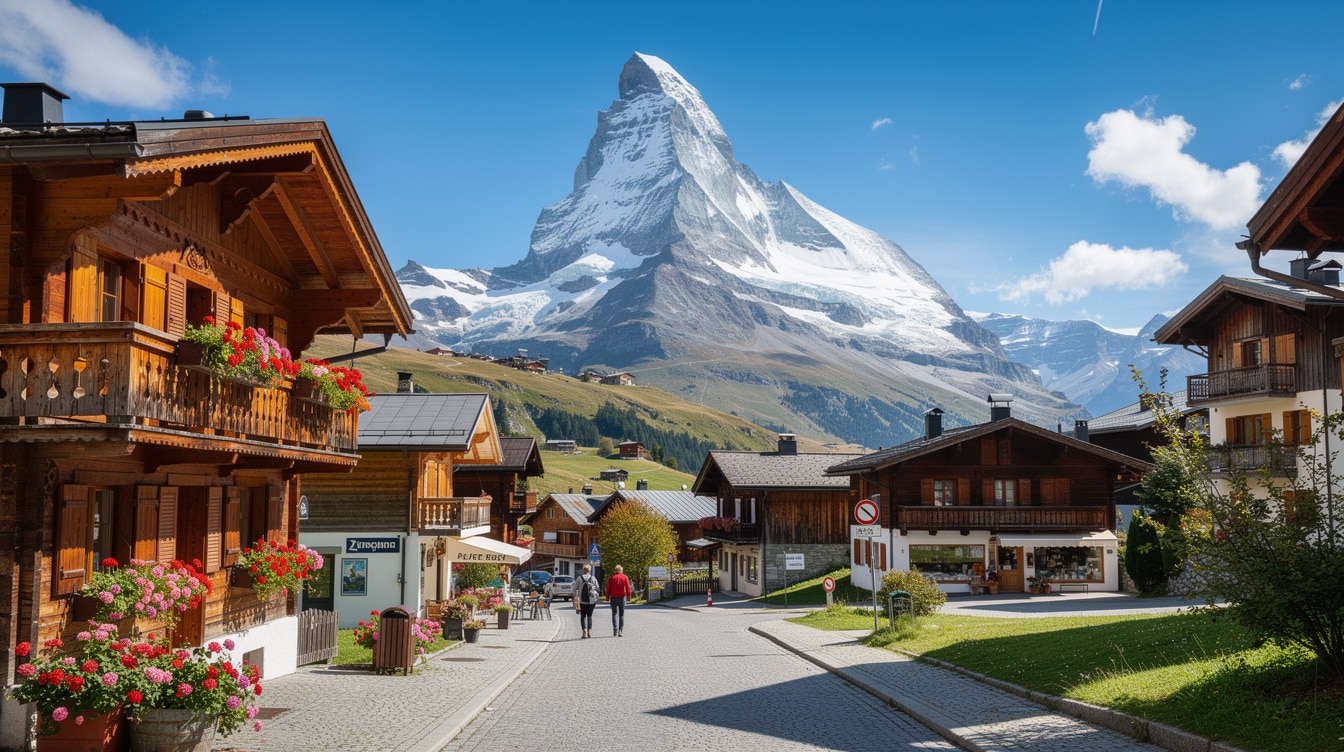
Zermatt is a car-free village at 5,300 feet, and arriving there feels like stepping into a postcard that someone painted in the 1800s and forgot to update. Narrow streets lined with dark wooden chalets, flower boxes overflowing with red geraniums, and the Matterhorn looming at the end of every view corridor like it is watching you.
The Matterhorn is 14,692 feet of pyramidal granite and ice, and it is the single most recognizable mountain on Earth. You have seen it on the Toblerone wrapper. You have seen it at Disneyland. But standing in Zermatt and looking up at the real thing, you understand why this mountain has obsessed climbers and artists and travelers for centuries. It is perfect. Geometrically, dramatically, impossibly perfect. And it changes color throughout the day, from gray in the morning to gold at sunrise to pink at sunset to ghostly white under a full moon.
Alpine Meadows
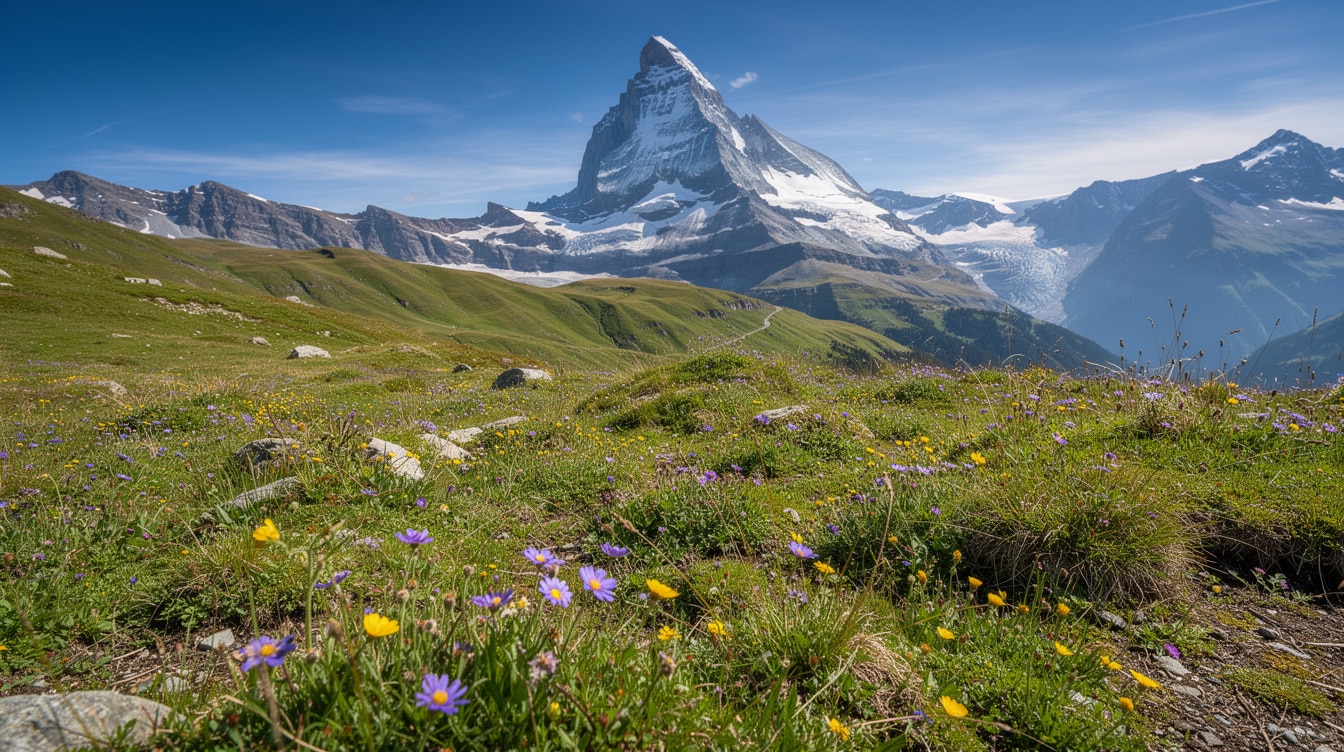
Take the Gornergrat Railway from Zermatt to the highest open-air railway station in Europe at 10,135 feet. The thirty-minute ride climbs through forests and emerges into alpine meadows that in summer are carpeted with wildflowers in purple, yellow, white, and blue. Behind the flowers, behind the meadows, the Matterhorn rises into a sky that at this altitude is a blue so deep it almost looks dark.
Hike the trails that crisscross these meadows. The air is thin and clean and smells like nothing but grass and stone. Marmots whistle from the rocks. Mountain streams run so clear you can drink from them. And everywhere you look, mountains. Not just the Matterhorn, but the entire Monte Rosa massif, the Breithorn, the Dufourspitze, peak after peak after peak in a 360-degree panorama of snow and ice that will make you feel very small and very lucky to be alive.
The Glacier
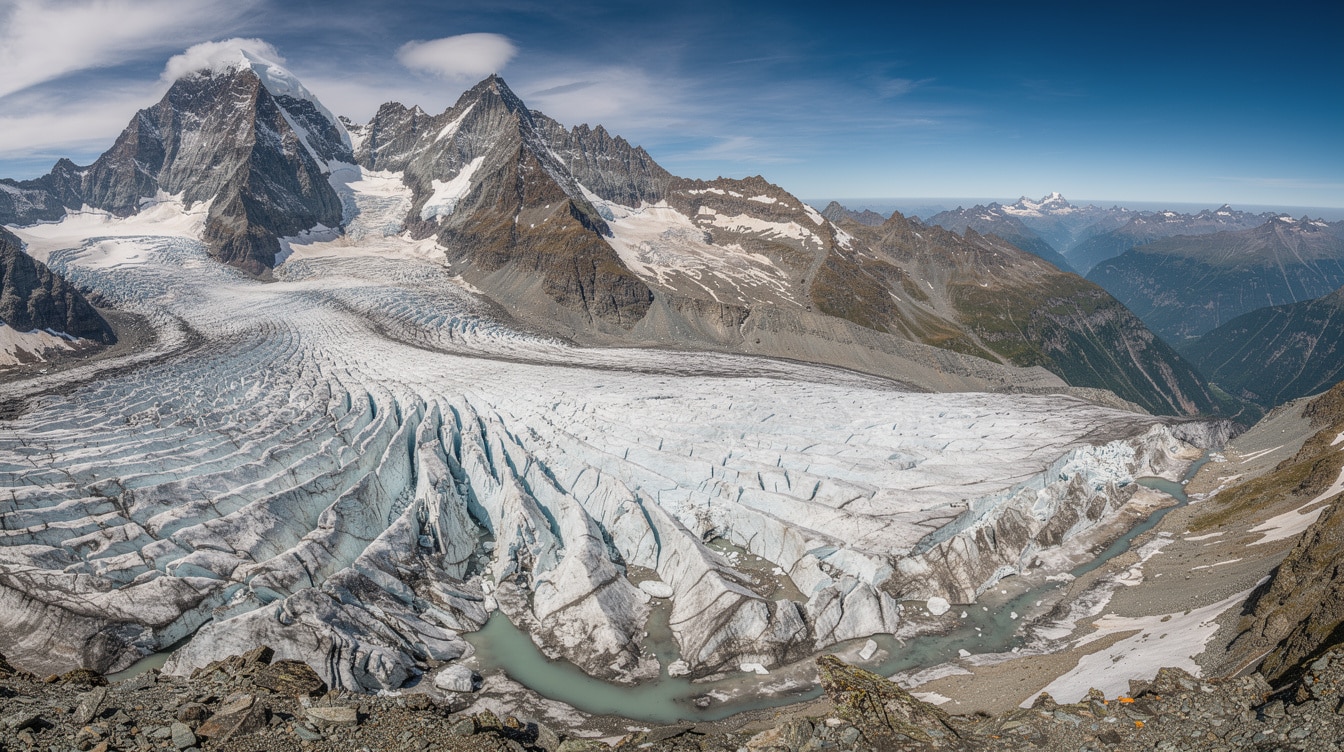
From the Gornergrat viewpoint, you look down on the Gorner Glacier, a river of ice that stretches for miles between the peaks. The scale is difficult to comprehend. The glacier is cracked with crevasses, streaked with dark moraines, and moving imperceptibly downhill under the weight of thousands of years of accumulated snow. It is shrinking, as all glaciers are, and seeing it now feels like both a privilege and a warning.
Switzerland is expensive. There is no way around that. The trains, the hotels, the restaurants, even a bottle of water costs more than you expect. But standing on the Gornergrat platform with the wind in your face and the glacier at your feet and the Matterhorn piercing the sky in front of you, you will not be thinking about the bill. You will be thinking about how some things are worth whatever they cost, and this view is one of them.


