

The bullet train from Tokyo takes two hours and fifteen minutes, and when you step off in Kyoto, the entire energy changes. Tokyo is electric, fast, neon, forward-looking. Kyoto is the opposite. Kyoto is where Japan keeps its soul, and it protects it fiercely. Over 2,000 temples and shrines. Wooden machiya townhouses that have stood for centuries. Geisha in white-painted faces walking down stone-paved lanes at twilight. This city was the imperial capital of Japan for over a thousand years, and it carries that history in every stone, every garden, every perfectly raked sand pattern.
Fushimi Inari: Ten Thousand Gates
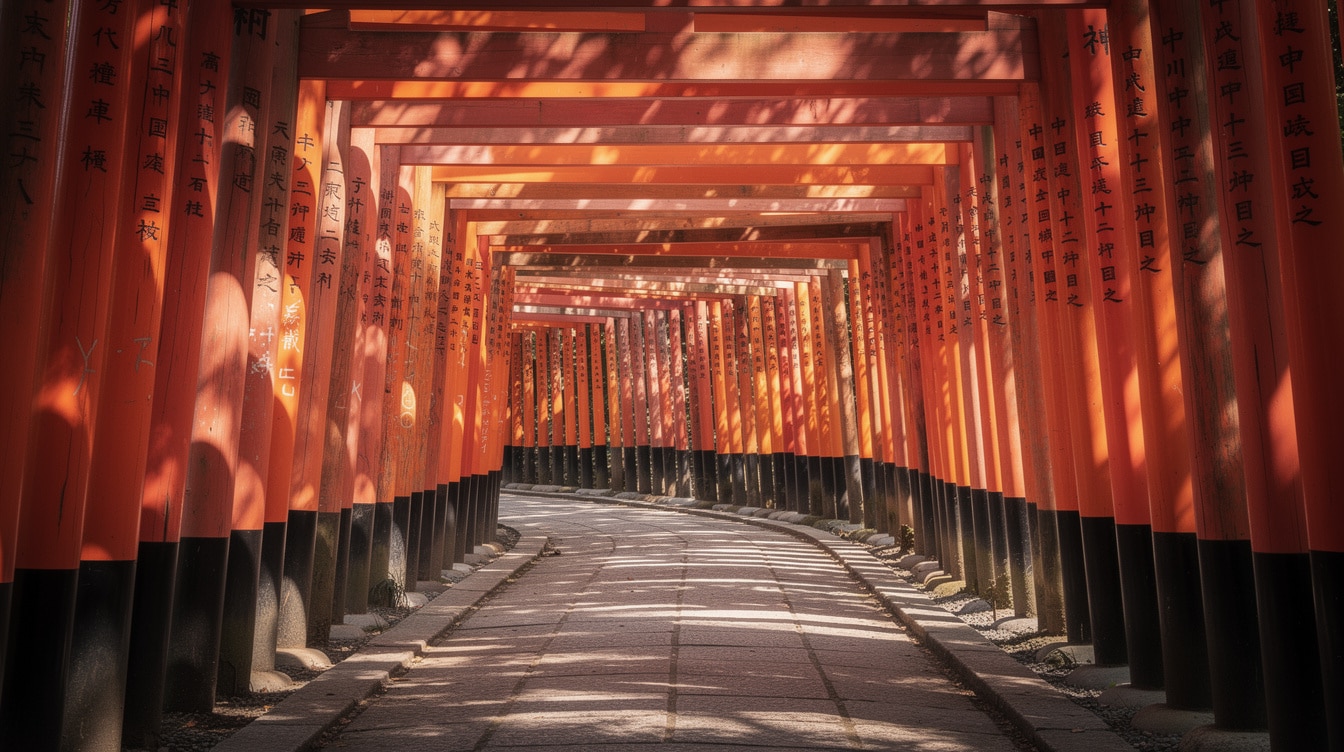
Fushimi Inari Taisha is the single most iconic sight in Kyoto, and it earns that title completely. Imagine a mountain trail winding upward through a tunnel of bright vermillion torii gates, thousands of them, placed so close together that they create a corridor of red that stretches into the forest as far as you can see. Each gate was donated by a Japanese business for good fortune, and the names of the donors are painted in black kanji on the back of each one.
The trail to the summit takes about two hours round trip. Most tourists stop at the first major intersection, maybe twenty minutes in. Keep going. The further you climb, the fewer people you encounter, and the older and more weathered the gates become. Near the top, moss grows on the wooden posts and the sunlight filters through gaps in the gates to create patterns of light and shadow on the path that look like something from a dream.
Go at dawn. I cannot stress this enough. The shrine is open 24 hours and at 6 AM on a weekday you can walk through those gates nearly alone, with morning mist rising through the forest and the light turning everything gold. By 9 AM it is packed. The difference between the two experiences is the difference between visiting a temple and having a spiritual moment.
The Bamboo Grove
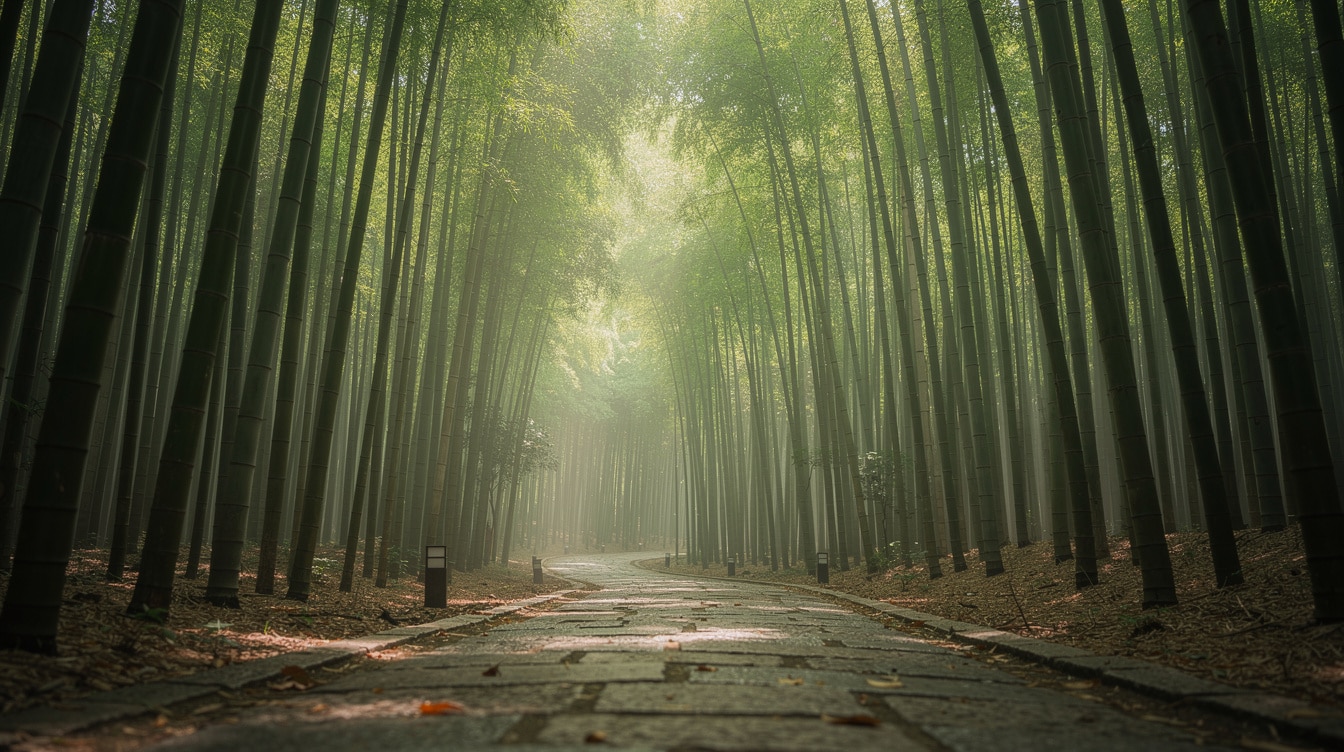
Arashiyama Bamboo Grove is smaller than you expect. The main path through the towering bamboo is maybe 500 meters long, and you can walk it in ten minutes. But those ten minutes are unforgettable.
The bamboo shoots grow straight up, some of them over 60 feet tall, and they are so dense that they create a natural canopy that filters the sunlight into a soft green glow. When the wind blows, the stalks creak and knock against each other, creating a sound that the Japanese government has designated one of the 100 Soundscapes of Japan. It is not silence exactly. It is a living, breathing quiet that makes you slow down and pay attention.
Again, go early. By mid-morning the path is shoulder to shoulder with tour groups. At 7 AM, you can stand in the middle of the grove and hear nothing but bamboo and birds. Take the path slowly. Look up. Let the green light and the gentle sound of the bamboo do its work. This is not a place to rush through.
The Golden Pavilion
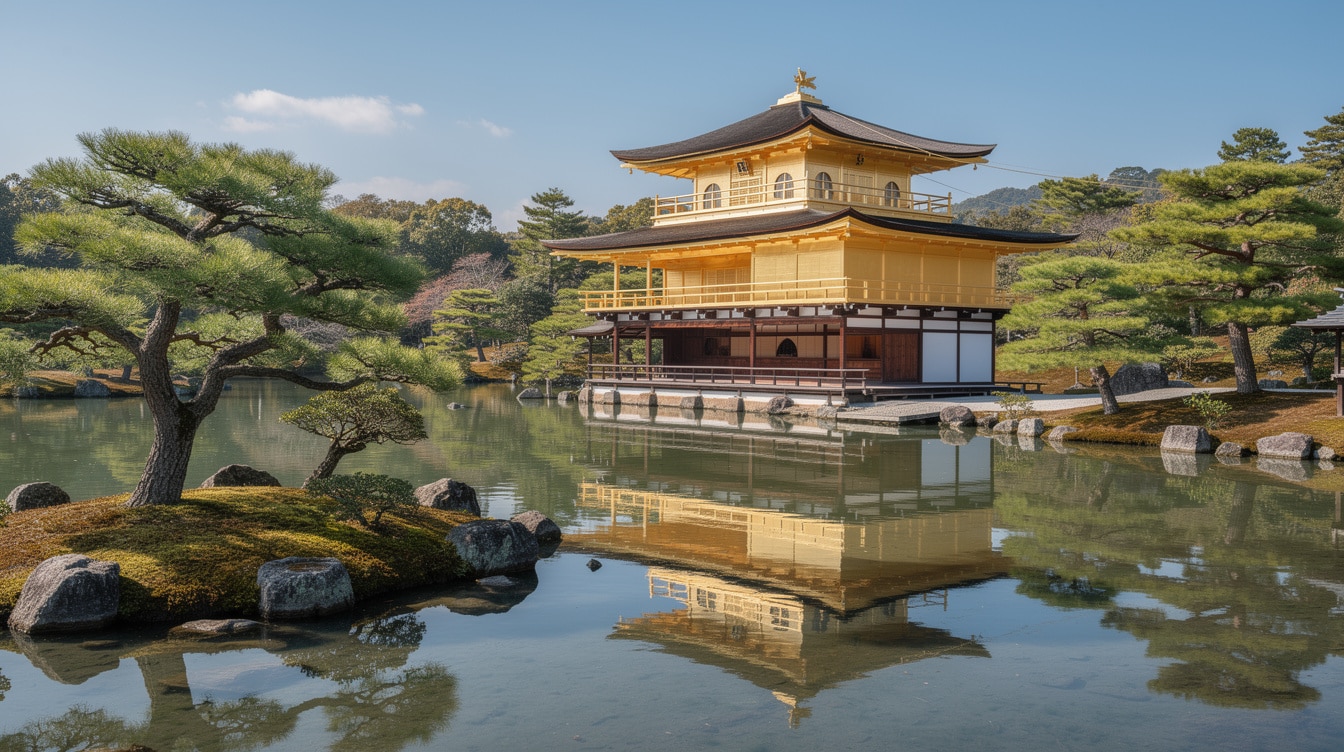
Kinkaku-ji, the Golden Pavilion, is the most famous temple in Japan, and it is one of those rare landmarks that looks exactly like the photographs. A three-story pavilion covered in gold leaf, sitting on the edge of a mirror pond, reflecting perfectly in the still water. Surrounded by a meticulously designed Japanese garden with sculpted pines and stone arrangements that have been maintained for over 600 years.
The current building is actually a reconstruction. The original was burned down in 1950 by a disturbed monk, an event that inspired one of the most famous novels in Japanese literature. The replica is perfect, and on a clear day when the pond is still, the reflection is so flawless that photographs of Kinkaku-ji look like they have been mirrored in Photoshop. They have not. It actually looks like that.
There is a tea house on the temple grounds where you can sit on tatami mats and drink matcha with a traditional Japanese sweet while looking out at the garden. Do this. Sit. Drink slowly. Watch the light change on the gold leaf. This is Kyoto at its most essential: beauty, simplicity, and the understanding that some moments deserve your full attention.
Gion at Twilight
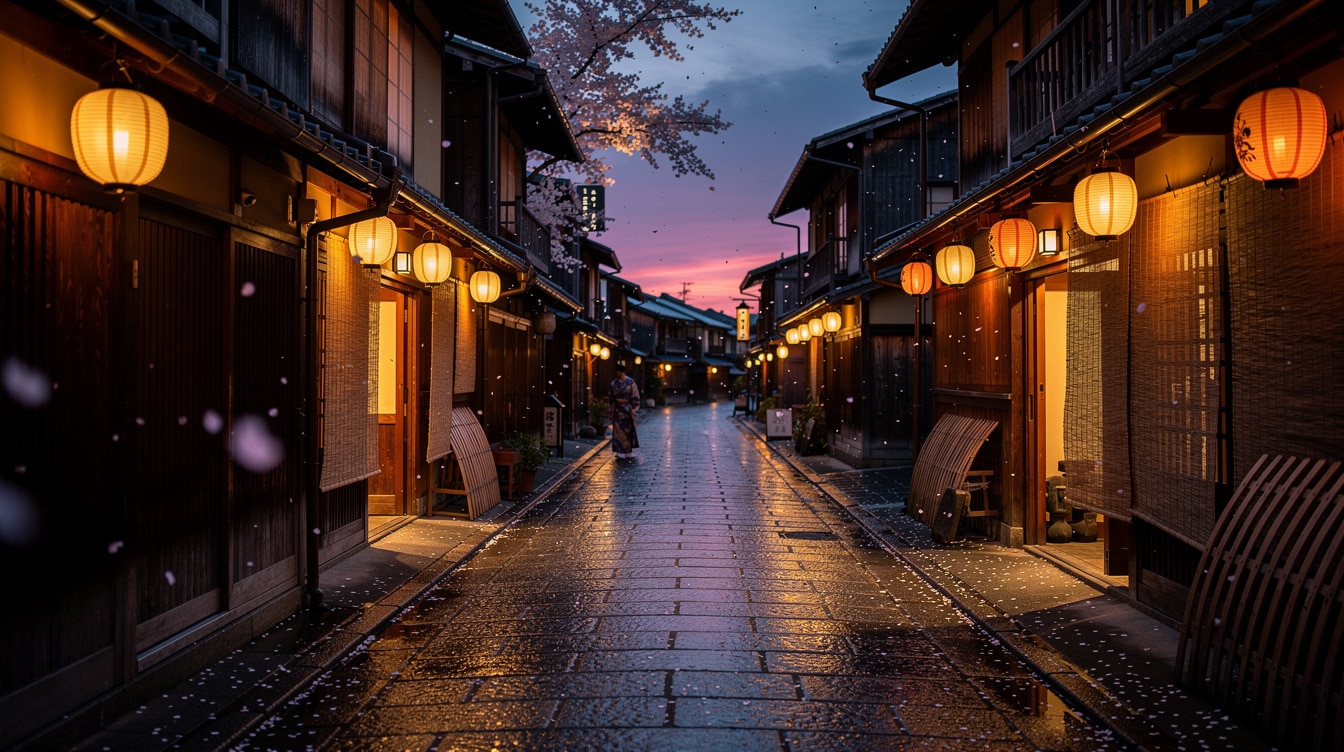
Gion is Kyoto’s famous geisha district, and walking through it at twilight is like stepping into a woodblock print. The narrow stone streets are lined with traditional wooden machiya houses, their bamboo screens and paper lanterns glowing warm against the fading sky. This is where geiko (Kyoto’s word for geisha) and maiko (apprentice geisha) still live and work, and if you are lucky, you will see one hurrying down Hanamikoji street in full white-painted makeup and elaborate kimono, wooden sandals clicking on the stone.
Do not chase them. Do not block their path for photos. They are working professionals on their way to appointments, and the increasingly aggressive tourist behavior has become a real problem. Stand to the side, bow slightly if they pass, and appreciate the fact that you are witnessing a tradition that has existed for over 300 years.
Kyoto teaches patience. It rewards slowness. Every temple gate, every garden path, every tea ceremony, every carefully arranged rock is asking you to stop, to look, to be present. In a world that moves faster every year, Kyoto is a reminder that the most beautiful things happen when you stand still long enough to notice them.


