


You have seen Monument Valley a thousand times. In John Ford westerns, in car commercials, in every photograph that has ever tried to capture the idea of the American West. It is probably the most photographed landscape in the United States, so familiar that it feels like a place you have already been. And then you actually go there, and you realize that nothing prepared you for the scale.
Monument Valley sits on the Arizona-Utah border in the heart of the Navajo Nation. There is no town. There is no real infrastructure beyond a modest visitor center and a hotel. There is just the valley floor, a flat red-sand desert stretching in every direction, and the buttes. Massive, ancient, red sandstone formations that rise from the ground like the knuckles of a buried giant, reaching heights of 1,000 feet and standing alone against a sky so big it makes you dizzy.
The Mittens at Sunrise
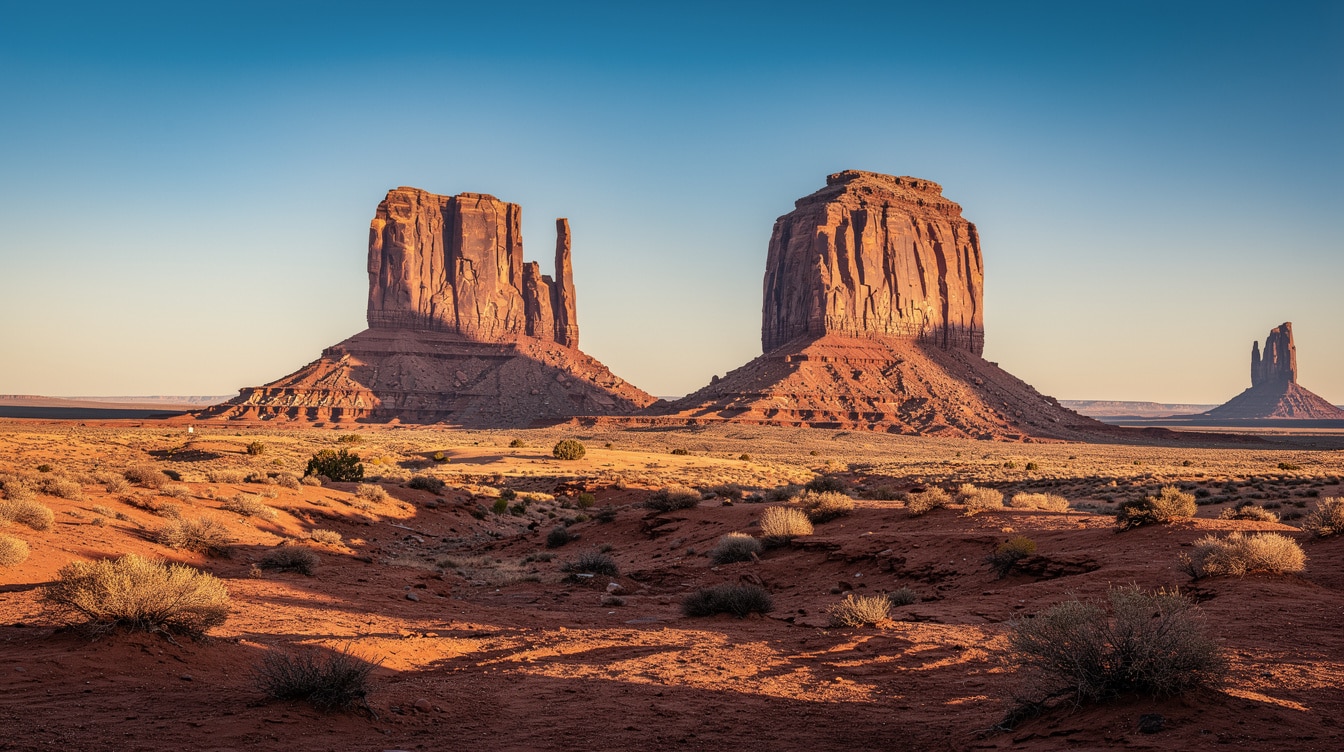
East Mitten, West Mitten, and Merrick Butte are the three formations you see in every classic Monument Valley photograph, and they are visible from the viewing area near the visitor center. Get there before sunrise. Watch the sky go from black to deep blue to purple to pink, and then the first ray of sunlight hits the top of East Mitten and the entire formation ignites. The red sandstone glows orange and gold, and the long morning shadows stretch across the valley floor like fingers reaching toward you.
The silence at sunrise in Monument Valley is extraordinary. There is no wind, no traffic, no voices. Just the desert and the stone and the growing light. I stood at the overlook with about a dozen other people, and nobody spoke. Not because someone told us to be quiet, but because the scene was so immense and so beautiful that talking felt irrelevant.
The Road In
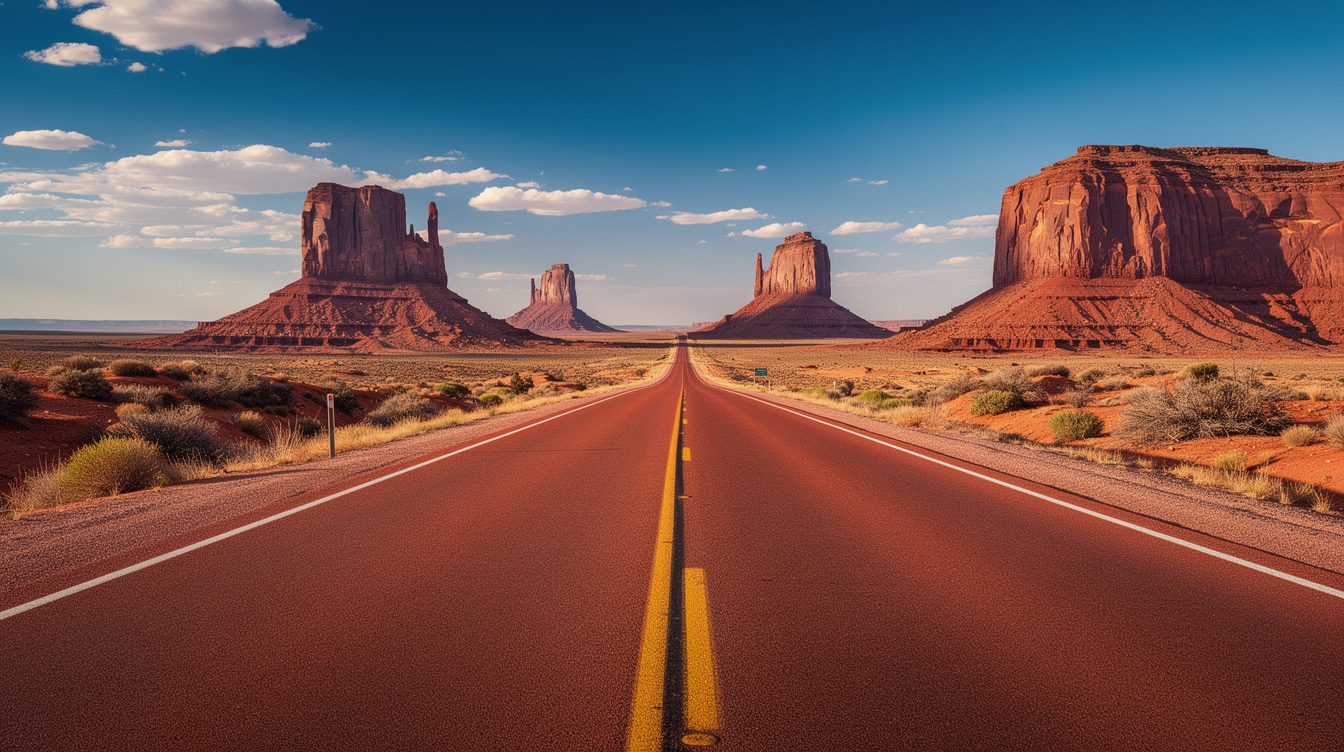
Before you even reach the valley, you drive what might be the most famous approach road in America. US-163 runs straight as a ruler through the desert toward the buttes, and there is a spot about thirteen miles north of the visitor center where the road dips and rises in a way that perfectly frames the Mittens in the distance. You have seen this image. You have seen it in Forrest Gump. You have seen it on a hundred postcards. But standing in the middle of that empty highway with the formations growing larger with every mile, you feel the full weight of this landscape for the first time.
Pull over (carefully) and stand in the road. Look south. The buttes float on the horizon like a mirage, and the road draws a perfect line toward them through the red desert. This is the shot. This is the image that says American West in two seconds flat. Take the photo. Then put your phone away and just look, because no screen will ever capture the feeling of standing alone on a highway in the middle of nowhere with a million years of geological history framed in front of you.
The Valley Floor
The 17-mile Valley Drive loop takes you among the formations on an unpaved road that is rough but passable in a regular car (drive slowly). Better yet, book a Navajo-guided tour. The Navajo guides can take you to restricted areas that are closed to self-guided visitors, including some of the most dramatic arches, petroglyphs, and hidden alcoves in the valley. They will also share stories about the landscape that go back generations, connecting the formations to Navajo history and spirituality in ways that transform them from scenic landmarks into sacred places.
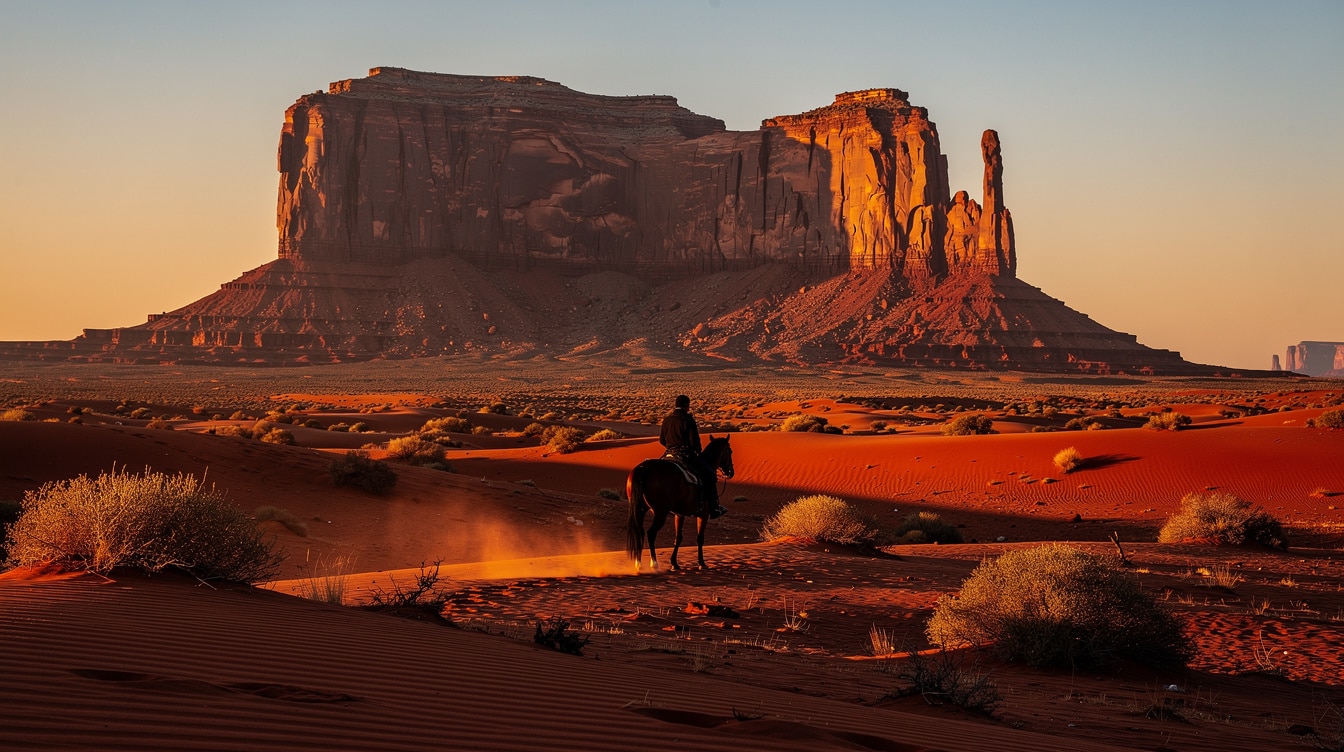
Horseback tours are available and worth every penny. Riding through the valley on horseback, passing between formations that tower above you on both sides, with nothing but the sound of hooves on red sand and the occasional call of a raven overhead, is the closest you will get to experiencing Monument Valley the way people have for thousands of years.
The Night Sky
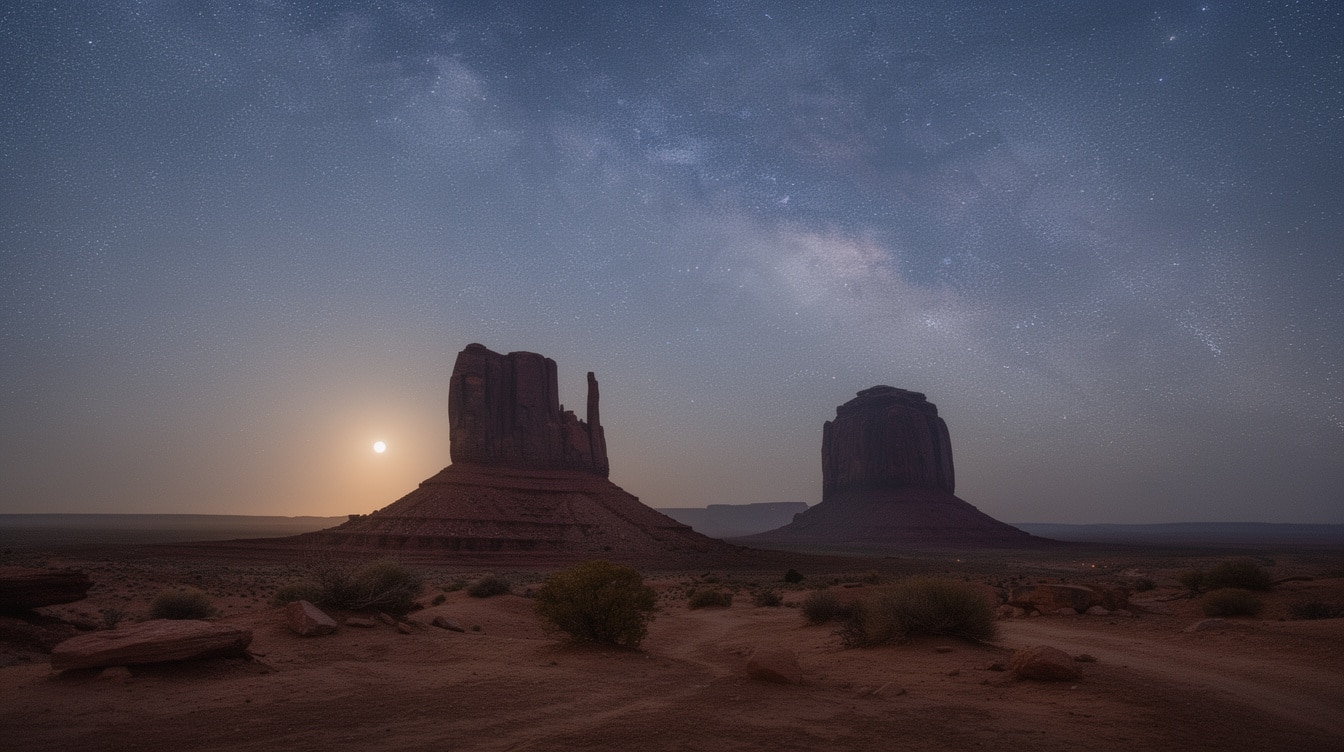
Stay for the stars. Monument Valley has some of the darkest skies in the continental United States, and on a clear moonless night the Milky Way arches across the sky above the buttes like a river of light. You can see thousands of stars, satellites tracking silently across the darkness, and occasionally a meteor streaking across the sky and vanishing before you can point at it.
Set up a chair or a blanket near the visitor center, turn off every light, and let your eyes adjust. After about twenty minutes, the sky opens up in a way that is difficult to describe to someone who has only seen it from a city. The buttes become dark silhouettes against the star field, and the scale of the universe becomes visible in a way that makes all your problems feel appropriately small.
Monument Valley is not a place you visit for comfort. There are no fancy restaurants, no boutique hotels, no curated experiences. It is raw and vast and ancient and indifferent to your presence. That is exactly what makes it powerful. Standing in the middle of that valley, surrounded by formations that have watched the Earth change for 300 million years, you feel something that most travel experiences cannot give you: perspective. Real, geological, humbling perspective. And in a world that moves too fast and thinks too small, that is worth the drive.


