


The ferry pulls into the caldera and you see it for the first time: a crescent of white stone clinging to the side of a volcanic cliff, hundreds of feet above water so blue it looks like someone spilled ink into the Aegean. That is Santorini. And nothing, not the Instagram photos, not the travel blogs, not the postcards, can prepare you for what it actually looks like in person.
Santorini is not really an island in the traditional sense. It is the rim of a massive volcanic caldera that erupted around 1600 BC, one of the largest volcanic events in recorded history. What remains is this dramatic crescent of rock with villages perched on the edge, overlooking a flooded crater that drops to over 1,300 feet deep. The geology alone would make it worth visiting. The fact that it also happens to be one of the most beautiful places on the planet is almost unfair.
Oia: The Village That Broke Instagram
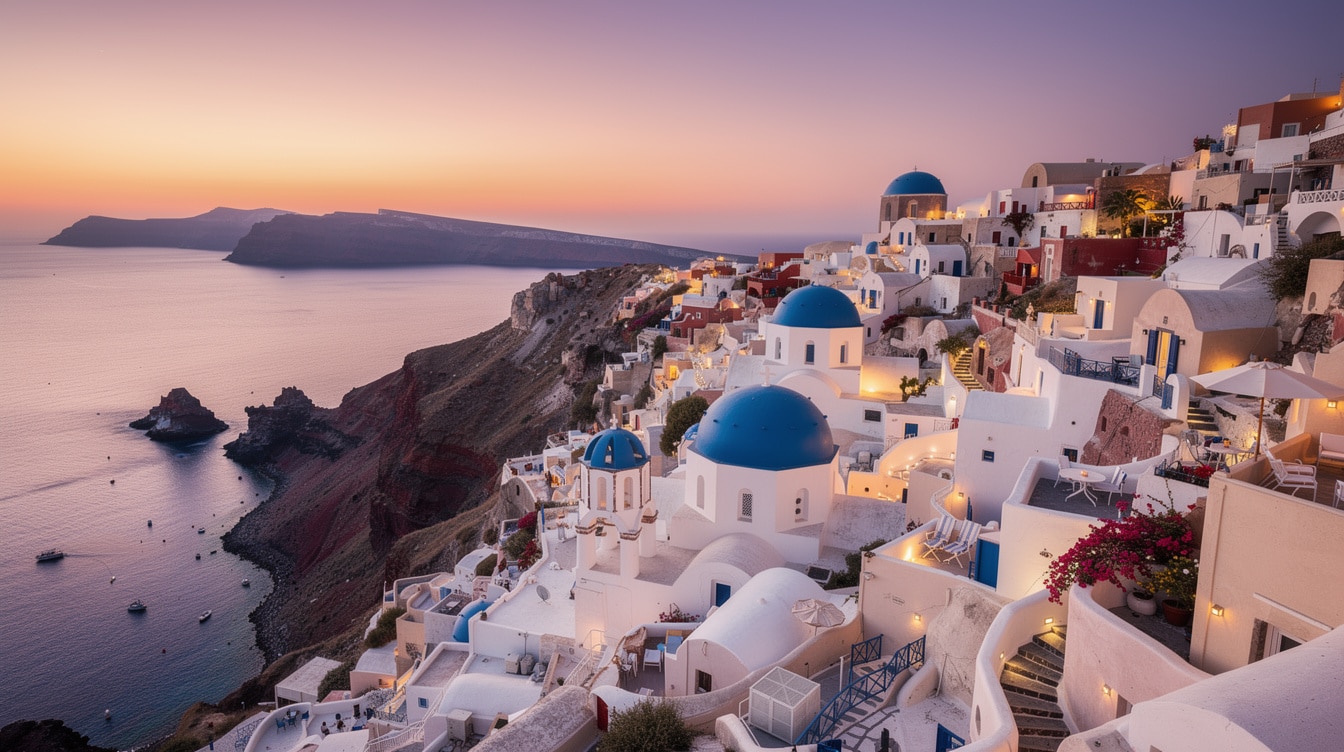
Everyone comes to Santorini for Oia, and I understand why. This tiny village at the northern tip of the island is a cascading maze of white-washed buildings, blue-domed churches, and narrow stone staircases that wind down the cliff face toward the sea. Every turn reveals another postcard view. Every rooftop is someone’s dream terrace. The whole place feels like it was designed specifically to make you fall in love.
The famous sunset in Oia draws hundreds of people every evening to the castle ruins at the western edge of the village. They line up on the walls, they sit on rooftops, they crowd into every restaurant with a view. And when that sun drops below the horizon and the sky explodes into shades of orange, pink, and deep violet, every single one of them goes silent for about three seconds. Then the applause starts. I have never been anywhere else where people clap for a sunset. In Oia, it happens every single night.
My advice: skip the castle crowds. Walk ten minutes south along the caldera path and find a quieter spot. The sunset is identical. The experience is ten times better when you are not elbow to elbow with two hundred strangers holding phones over their heads.
The Blue Doors and Hidden Corners
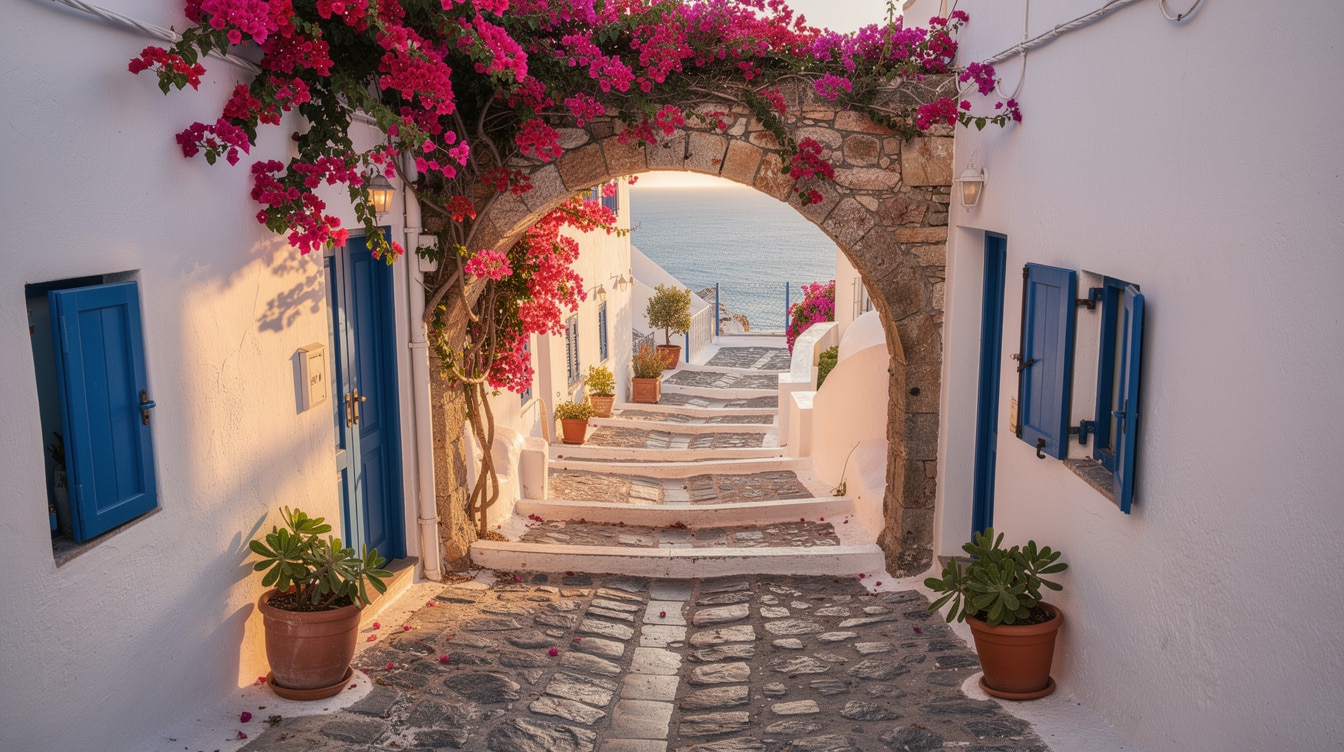
The thing about Santorini that surprised me most was the quiet moments. Everyone talks about the big views, the sunsets, the caldera. But some of my favorite memories are from getting lost in the narrow alleyways of the villages. Stone staircases that lead nowhere. Bright blue doors set into white walls. Bougainvillea spilling over archways in shades of pink and magenta so vivid they look artificial.
Wander away from the main path in Oia or Fira and you will find yourself alone on a cobblestone lane with nothing but white walls, blue sky, and the distant sound of church bells. These quiet corners are where Santorini stops being a tourist destination and starts being a real place. A place where people hang their laundry on lines stretched between buildings and cats sleep in doorways and the air smells like oregano and sea salt.
The Caldera Views
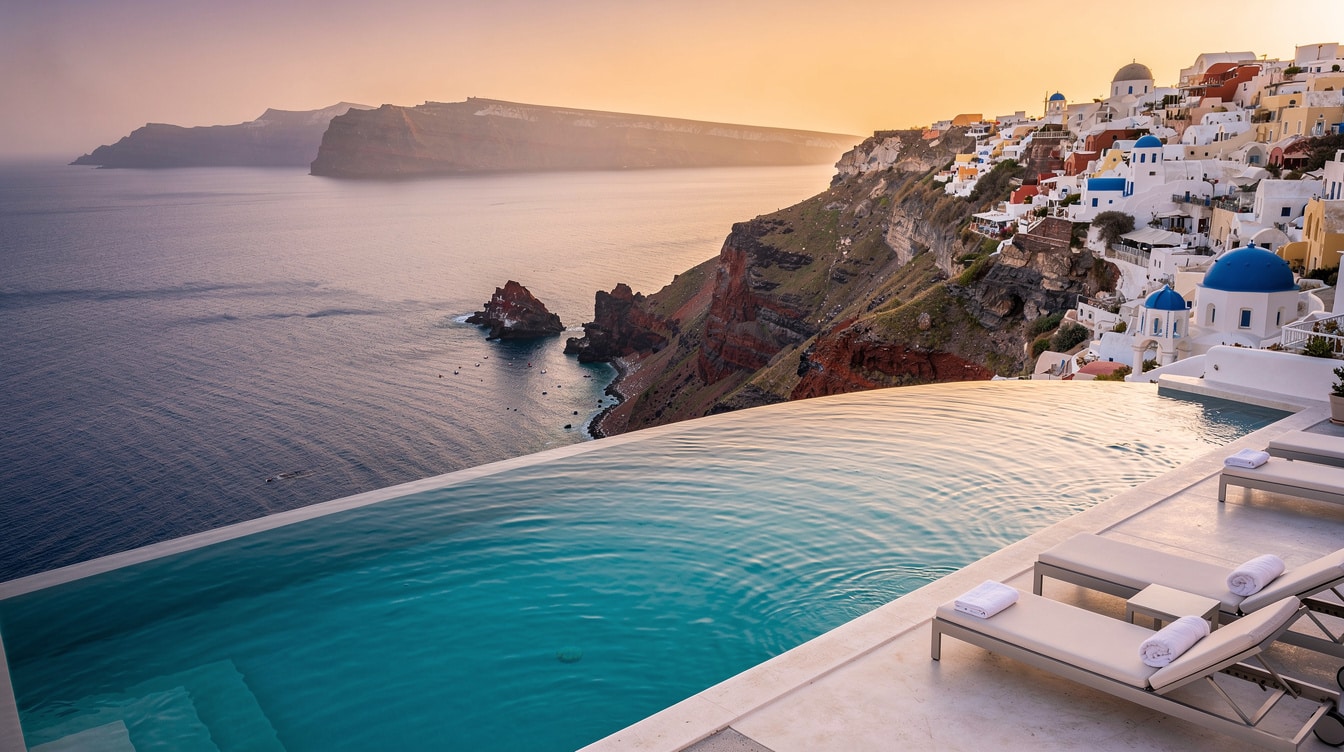
If you can swing it, stay somewhere with a caldera view. I know it costs more. I know you can find cheaper rooms on the east side of the island. But waking up to that view, stepping onto your terrace with a cup of Greek coffee and looking out over the deep blue water of the caldera with the volcanic islands floating in the middle and the morning light turning everything gold, that is worth whatever it costs.
The caldera itself is mesmerizing. The water changes color throughout the day, from pale turquoise in the morning to deep navy by afternoon. Cruise ships anchor in the middle, looking tiny against the massive cliff walls. The volcanic island of Nea Kameni sits in the center, still steaming, a reminder that this whole place was created by something violent and beautiful.
I spent an entire morning just sitting on a terrace in Fira, watching the light move across the caldera. No phone, no camera, no agenda. Just watching. It was one of the best mornings of my life.
Beyond the Postcard
Santorini has more than views. The beaches are volcanic and otherworldly. Red Beach is exactly what it sounds like: towering red cliffs dropping into deep blue water, with red and black volcanic pebbles instead of sand. Perissa Beach on the east coast has black sand so dark it looks like crushed charcoal, and the water is warm and calm enough for swimming from May through October.
The food is incredible. Fresh grilled octopus, fava bean puree that Santorini is famous for, tomato fritters made from cherry tomatoes that only grow in the island’s volcanic soil, and wines from grapes that have been cultivated here for thousands of years. The Assyrtiko white wine is crisp and mineral and perfect with seafood. I had it every single night and felt zero guilt about it.
Hike the caldera path from Fira to Oia. It is about six miles and takes three to four hours, and it is one of the best hikes I have ever done. The trail follows the cliff edge the entire way, passing through tiny villages, past white churches, and over rocky terrain with the caldera spread out below you the whole time. Start early to avoid the heat and bring water. The payoff is arriving in Oia just in time for sunset, exhausted and happy and completely in love with this impossible island.
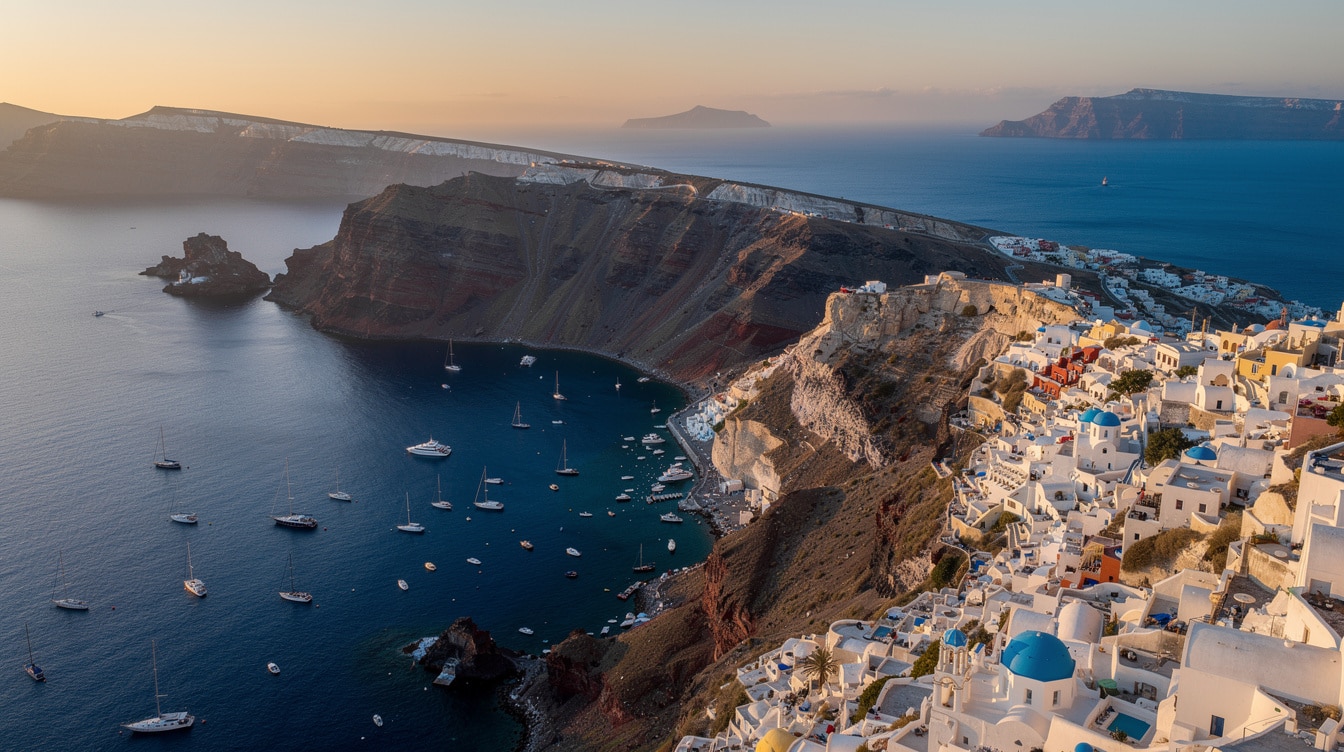
Santorini is one of those places that actually lives up to the hype. Every photo you have ever seen of it is real. The white buildings, the blue domes, the sunsets, the caldera, it all exists and it is all as beautiful as you imagined. But the thing the photos cannot capture is the feeling. The feeling of standing on the edge of a volcano, looking out at water that has filled the crater of an ancient explosion, watching the sun set on a civilization that has been watching that same sun set from that same cliff for three thousand years. That is something you have to experience for yourself.


