

The wind hit me the moment I stepped off the bus at Torres del Paine, so strong it nearly knocked me sideways. Welcome to Patagonia. This is a place where the weather does not care about your plans, the mountains do not care about your comfort, and the landscape is so vast and wild that it makes you feel like the smallest, most insignificant thing on Earth. And somehow that feeling is exactly what you came for.
Torres del Paine National Park sits at the southern tip of Chile, where South America narrows to a sliver before giving way to the wild seas around Cape Horn. It covers 700 square miles of granite peaks, glaciers, turquoise lakes, and golden steppe that looks like it stretches to the end of the world. Because it essentially does.
The Towers at Sunrise
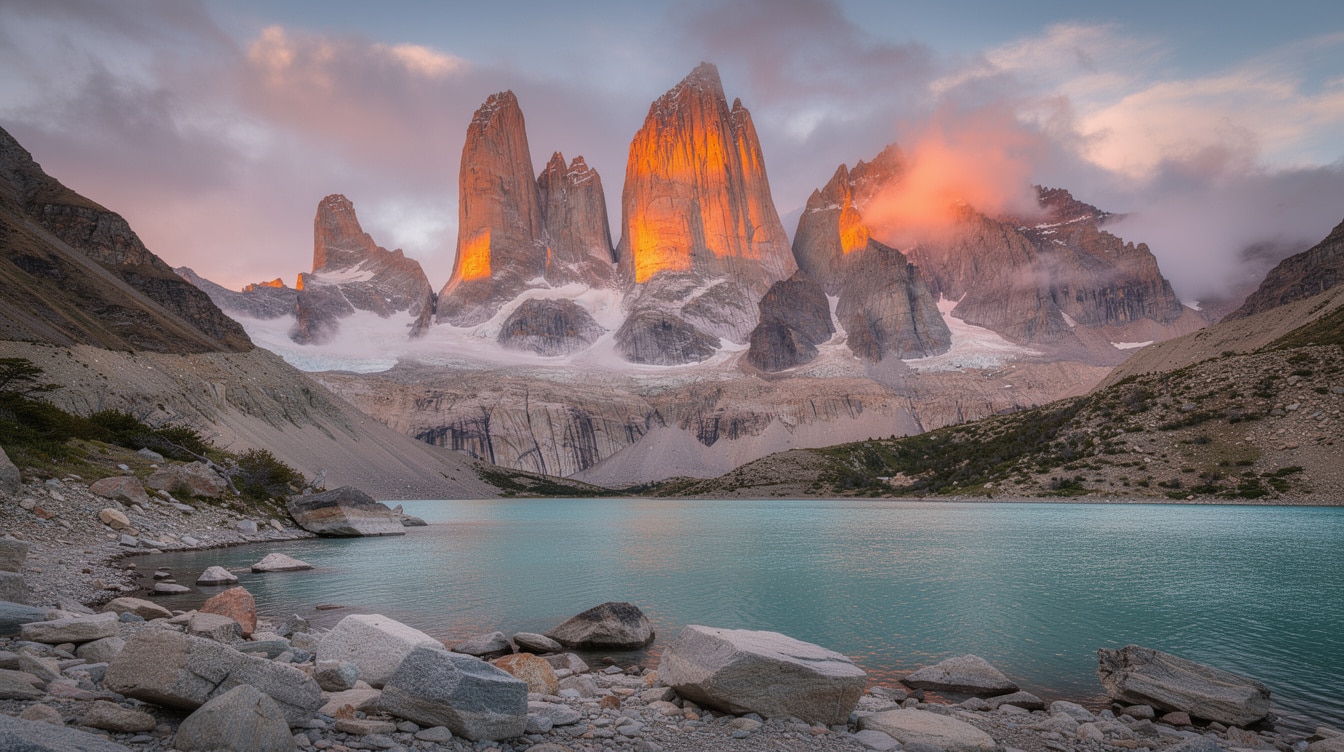
The three granite towers that give the park its name are the reason most people come, and seeing them at sunrise is one of those experiences that rearranges your understanding of what nature can do. The hike to the base starts in the dark, about two hours before dawn, climbing through beech forest and then scrambling over a boulder field until you reach the mirador overlooking a turquoise glacial lake with the towers rising straight up behind it.
When the sun breaks the horizon, the towers catch the light and turn from gray to orange to glowing red-pink in a transformation that takes about ten minutes and makes the entire freezing, exhausting hike worth every step. The towers are 8,000 feet of sheer granite, carved by millions of years of glacial erosion into shapes that look like they were sculpted by some enormous, angry artist. The lake at their base is that particular shade of turquoise that only glacial water achieves, milky and electric at the same time.
Grey Glacier
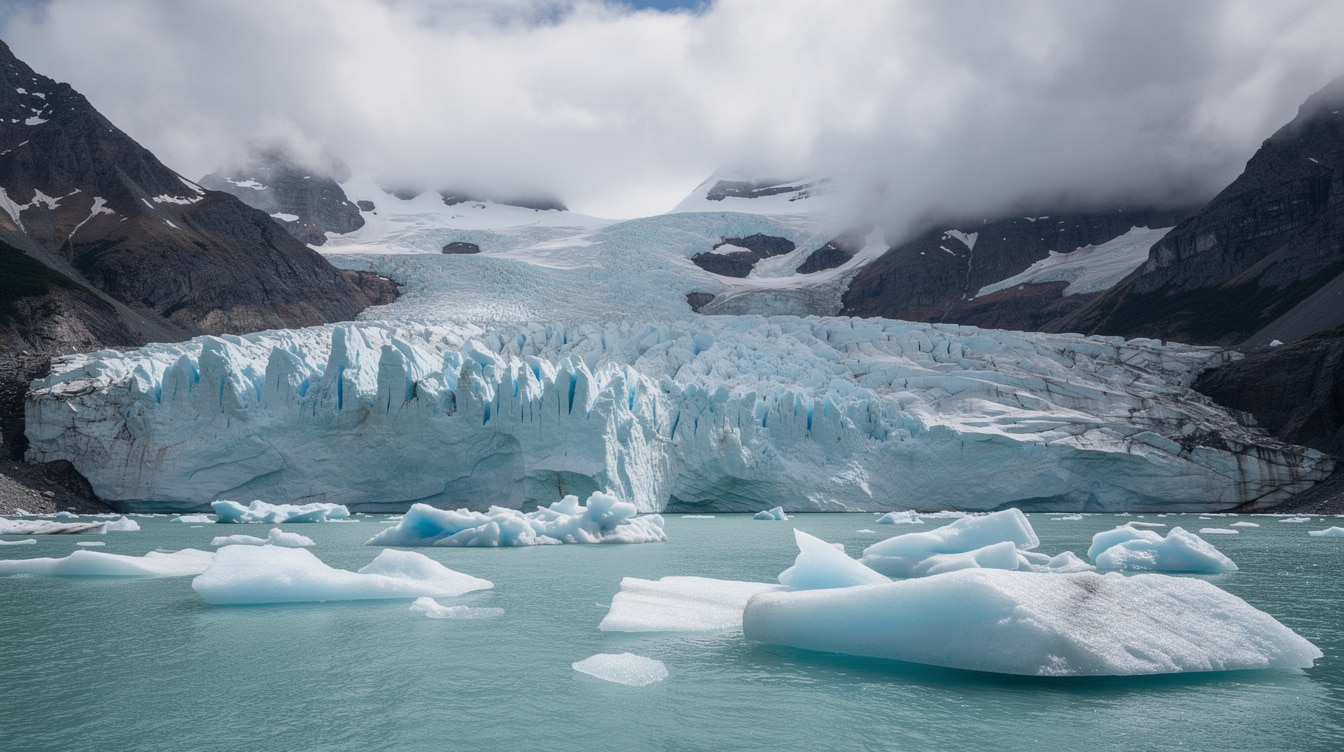
Grey Glacier is a river of ice that flows down from the Southern Patagonian Ice Field, the third largest ice field on Earth after Antarctica and Greenland. You can see it from a lookout point or take a boat across Lago Grey to get close to the face of the glacier. I did both, and the boat is the way to go.
As you approach the glacier, the water turns milky turquoise and icebergs float past the boat in shades of blue and white that look like they were lit from inside. The face of the glacier is a wall of ice over a hundred feet high, creaking and groaning as it slowly pushes forward. While we watched, a piece the size of a house calved off and crashed into the water with a sound like thunder. The wave rocked the boat. Everyone went silent. That is the sound of a planet in motion, and it is both beautiful and terrifying.
The Vast Steppe
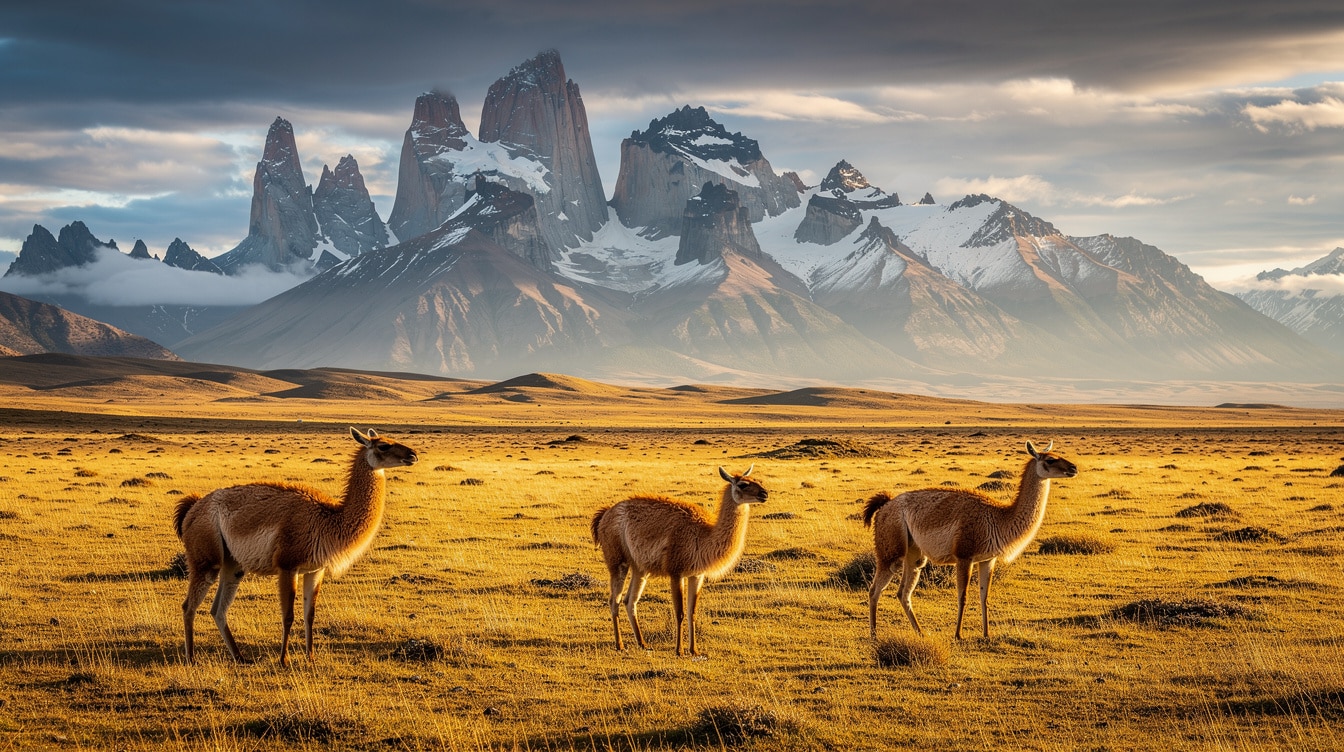
Between the mountains and the forest, Torres del Paine has vast stretches of golden steppe grass that roll to the horizon like a Patagonian ocean. This is where you see guanacos, the wild relatives of llamas, grazing in herds of twenty or thirty with the towers rising behind them. The scale is difficult to comprehend. You can see for fifty miles in every direction, and the only sounds are the wind and the occasional call of a bird.
The wind in Patagonia is legendary. I am not talking about a stiff breeze. I am talking about sustained 60 mph gusts that can knock you off your feet, flatten your tent, and turn rain into horizontal needles. On the W Trek, which is the most popular multi-day hike in the park, you will experience this wind almost every day. It is part of the adventure. It is also the reason Patagonia has that look, that lean, that sense that everything here is shaped by forces bigger than you.
Lake Pehoe
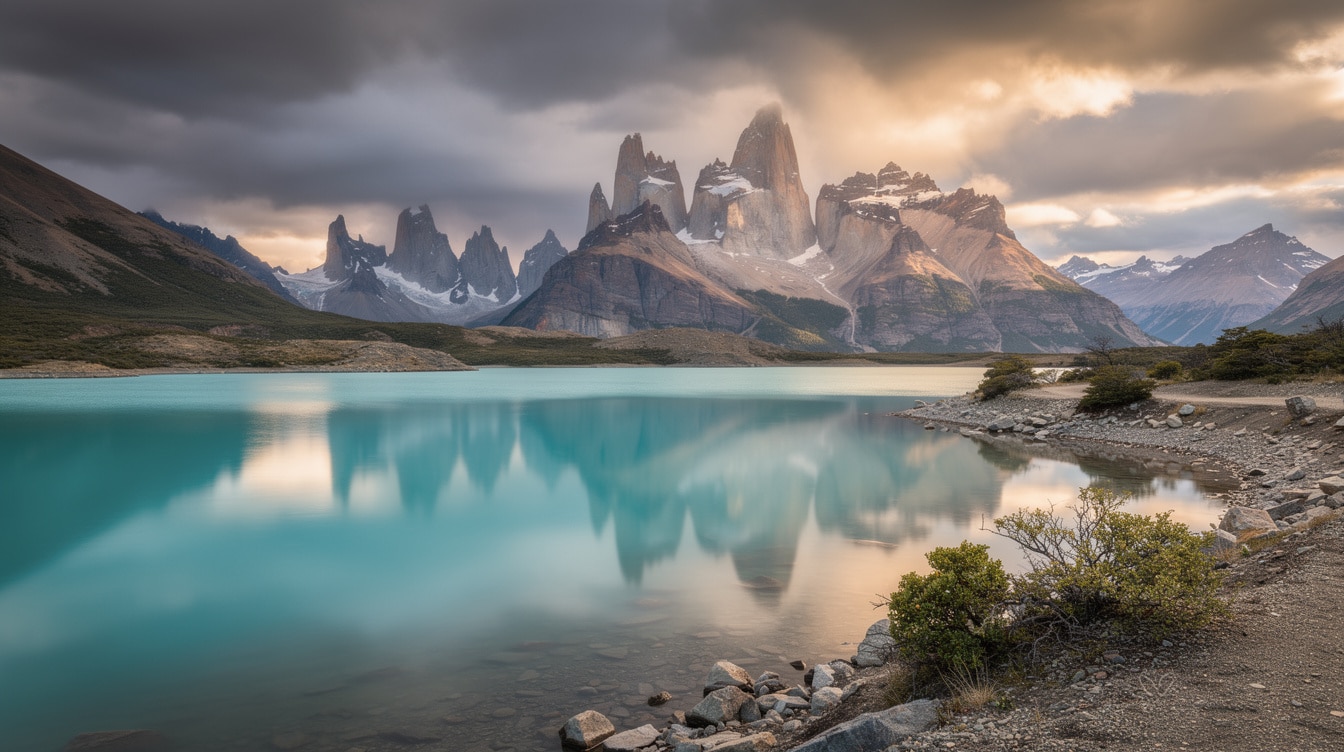
If Torres del Paine has a single most photographed view, it is Lake Pehoe with the Cuernos del Paine in the background. The Cuernos (horns) are horn-shaped peaks with dark caps of sedimentary rock sitting on top of lighter granite, creating a two-toned effect that looks like no other mountain range on Earth. Lake Pehoe sits in front of them, and on a calm day the entire range reflects in the turquoise water like a mirror.
I sat on the shore of Lake Pehoe for over an hour, just watching the clouds move across the peaks. The light changes constantly here, shadows racing across the mountains, patches of sun illuminating different valleys and ridges every few minutes. It is one of the most dynamic landscapes I have ever seen, never the same for more than a moment, always moving, always dramatic.
Torres del Paine is not a comfortable destination. The weather is brutal, the hiking is demanding, and you will be cold, tired, and wind-battered. But you will also stand in front of some of the most powerful natural beauty on this planet and feel something you cannot feel anywhere else: the raw, humbling, magnificent scale of a world that does not need you but lets you visit anyway. Go. Just bring a windproof jacket.


