


I woke up in Ubud to the sound of a gamelan orchestra playing somewhere in the distance, mixed with roosters and the soft patter of rain on palm leaves. The air was warm and heavy with the smell of frangipani and incense. I walked onto the terrace of my guesthouse and looked out over a valley of rice terraces, emerald green and impossibly lush, with mist rising from the paddies like the earth was breathing. And I thought: this is what peace feels like when it has a physical address.
Ubud is the cultural heart of Bali, and it is nothing like the party-fueled beach scene of Seminyak or Kuta. This is a town surrounded by rice paddies and rainforest, filled with temples, art galleries, yoga studios, and restaurants serving food so fresh the vegetables were probably growing that morning. It is the Bali that existed before the tourists came, and it still holds onto that energy with both hands.
Tegallalang Rice Terraces
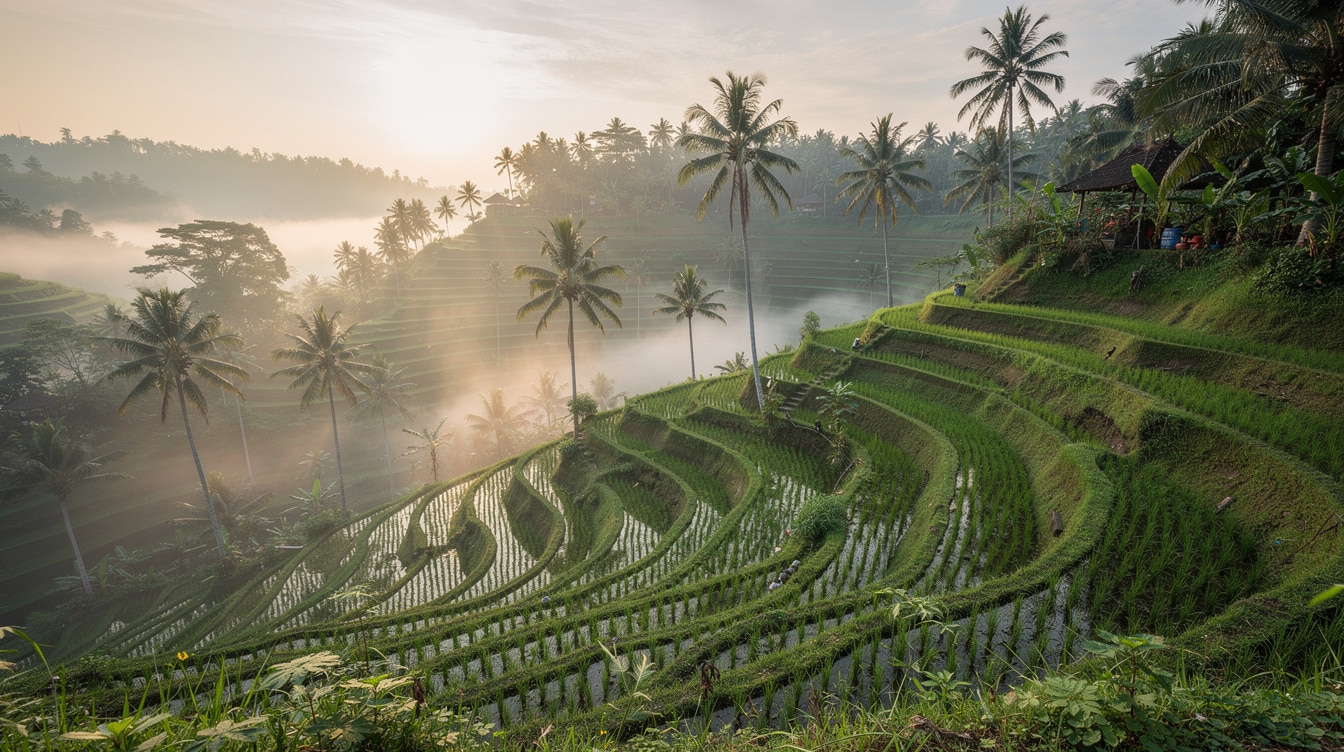
The rice terraces of Tegallalang are the single most iconic image of Bali, and seeing them in person is one of those moments where reality exceeds the photographs. The terraces cascade down a steep valley in carved emerald steps, each level reflecting the sky in shallow water, with palm trees rising from the ridges and jungle spilling over the edges. The Balinese subak irrigation system that feeds these terraces is a UNESCO World Heritage tradition that has been maintaining them for over a thousand years.
Go in the morning. By 10 AM the terraces are swarmed with tour groups and Instagram posers with selfie sticks. At 7 AM you can walk the narrow paths between the paddies almost alone, with nothing but the sound of water flowing through the channels and birds calling from the palm trees. The light at that hour turns everything gold and green, and the mist in the valley makes the whole scene look like a painting that is still drying.
Tirta Empul: The Sacred Spring
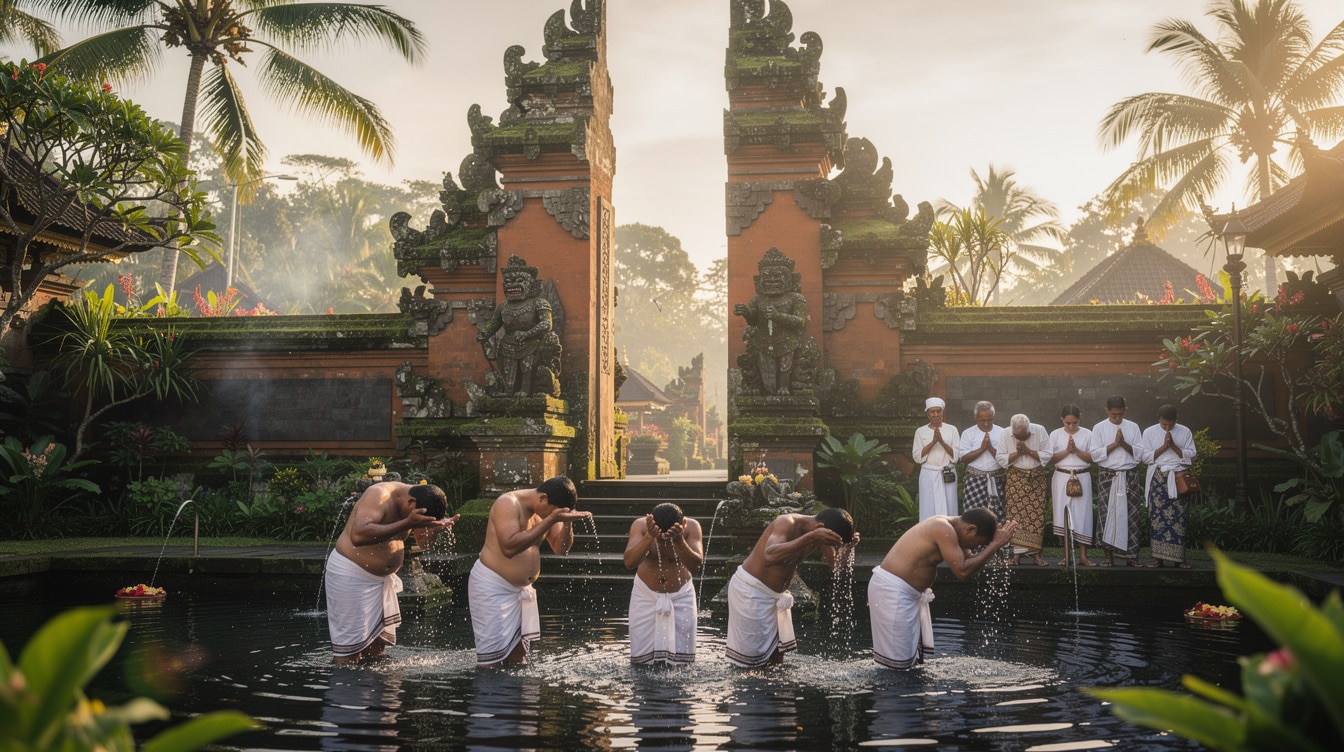
Tirta Empul is a water temple built around a natural spring that the Balinese believe has purifying and healing powers. Visitors can participate in the purification ritual, standing in waist-deep water and moving from fountain to fountain, letting the cold spring water pour over your head while offering a prayer at each one. You do not need to be Hindu to participate, but you do need to approach it with respect. Wear a sarong, follow the instructions, and understand that for the Balinese people around you, this is not a tourist activity. It is a sacred practice.
The temple itself is beautiful, with ornate stone carvings covered in moss and lichen, split gates that frame the sky, and offerings of flowers and incense placed on every surface. The spring water is shockingly cold and crystal clear, and standing under those fountains with your eyes closed, listening to the prayers and the rushing water, something shifts. Whether you call it spiritual or just the shock of cold water on a hot day, it stays with you.
The Sacred Monkey Forest
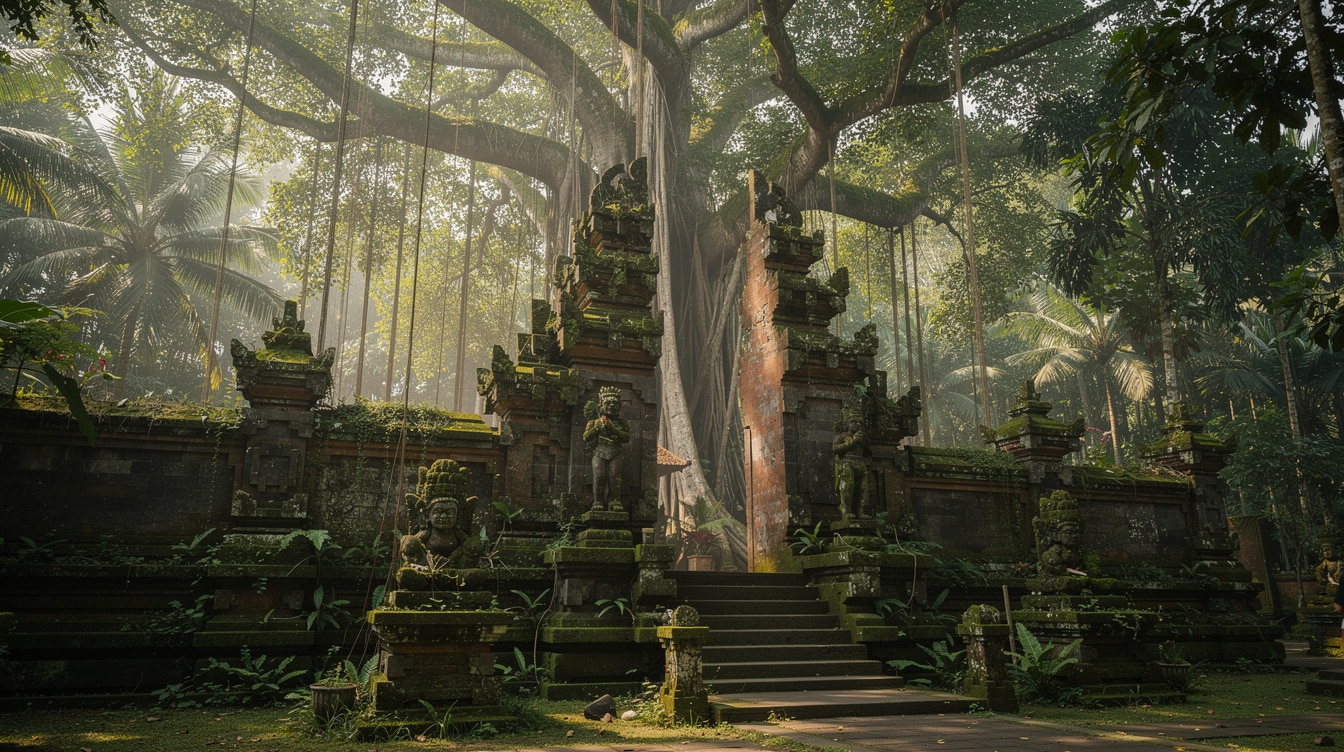
The Sacred Monkey Forest Sanctuary in the heart of Ubud is a dense tropical forest filled with ancient moss-covered temples, massive banyan trees with roots that look like they are trying to swallow the stone, and about 1,200 long-tailed macaques who absolutely run the place.
The monkeys are bold. They will grab anything that is not secured: sunglasses off your face, water bottles from your hand, phones from your pocket. Remove everything shiny before you enter. But once you get past the initial chaos, the forest itself is magical. Stone staircases lead down into ravines where temples sit half-reclaimed by the jungle. Moss covers every surface in shades of green. The light filters through the canopy in shafts that illuminate clouds of gnats and the occasional monkey grooming session.
The Ubud Feeling
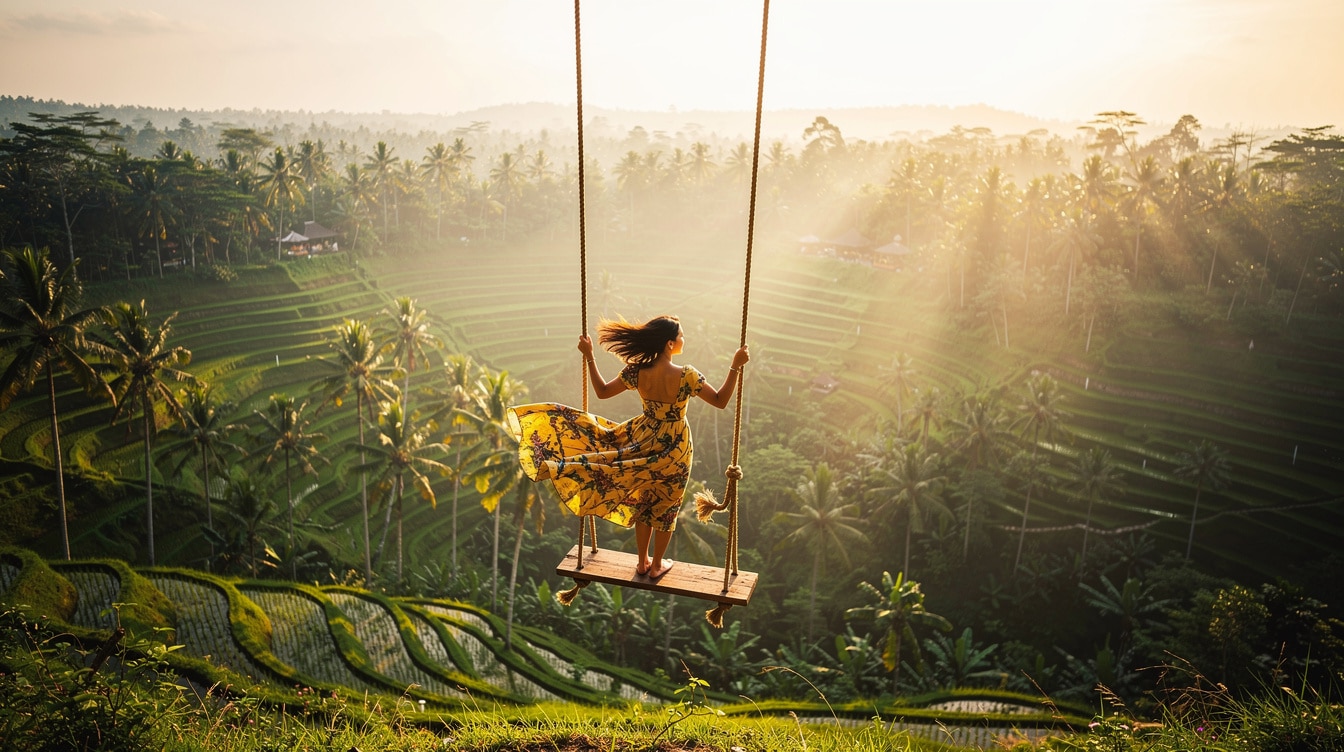
What surprised me most about Ubud was how quickly it changed my pace. Within two days I had stopped checking my phone compulsively. Within three I was waking up at 6 AM without an alarm, walking to the rice fields, and just sitting. Watching the light change. Listening to the water. Breathing air that tasted like flowers.
Ubud draws a certain kind of traveler. People looking for something they cannot name. People who have done the beach resorts and the city tours and the bucket-list checkboxes and want something deeper. You will find yoga retreats, meditation centers, Balinese cooking classes, and traditional dance performances. You will find healers and artists and musicians. You will find a town that believes beauty is a form of prayer and treats every meal, every offering, every sunrise as an act of devotion.
I did not want to leave Ubud. I rearranged my entire trip to stay three extra days, which turned into five, and when I finally did leave I cried in the taxi to the airport. That is the Ubud effect. It gets under your skin, into your bones, and shows you a version of yourself that is slower, calmer, and more present than you knew you could be. You will carry it with you long after the tan fades.


